Introduction
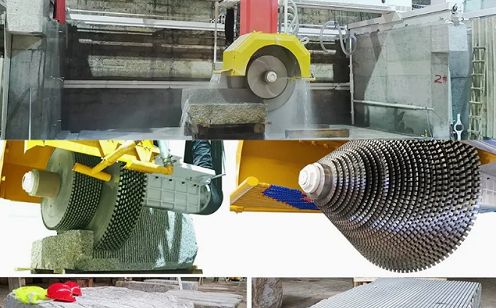
Choosing the right bridge saw can be challenging for stone fabrication shops, especially when basic models cannot handle complex cutting jobs and advanced machines may exceed production requirements. Different materials, product designs, and order volumes call for different combinations of cutting accuracy, automation, and machining functions. This guide explores the main types of bridge saw machines for stone fabrication, helping buyers match machine capabilities with their actual production needs.
4 Main Types of Bridge Saw Machines
The main differences between bridge saws lie in their control systems, cutting-axis configurations, and additional machining capabilities, which determine the range of jobs each machine can handle.
01. 4-Axis PLC Bridge Saws: Basic Slab Cutting
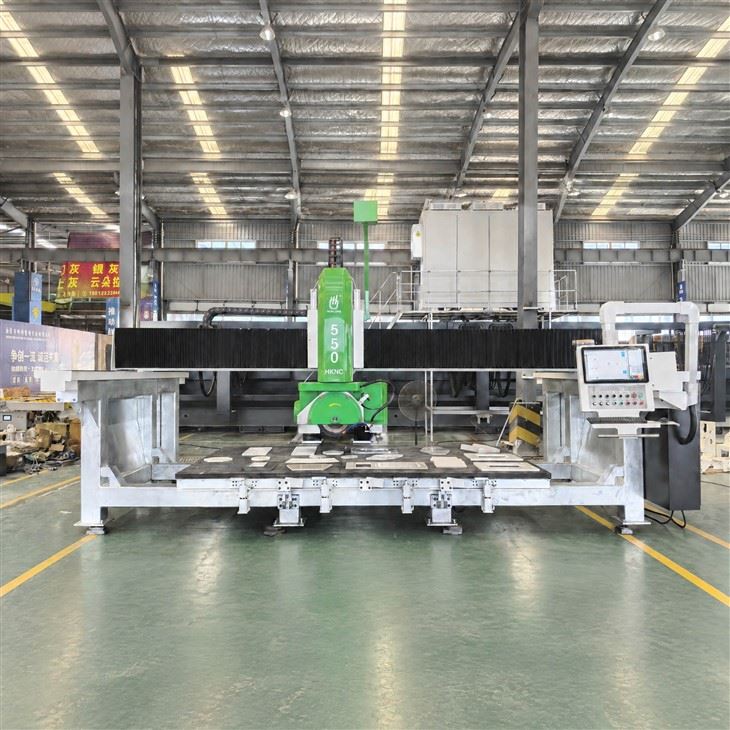
A 4-axis PLC bridge saw is suitable for workshops handling straight slab cutting, standard panel sizing, and routine 45° bevel cutting, with a relatively straightforward control system and a practical setup for everyday production. Monoblock construction is also available on selected models, simplifying transportation and installation where workshop space or foundation work is a concern.

02. 5-Axis CNC Bridge Saws: Complex Cutting
A 5-axis CNC bridge saw offers greater flexibility through a rotating and tilting cutting head, allowing operators to perform multi-directional cutting, curved profiles, polygon shapes, and 45° miter cuts for countertop fabrication. With compatible CAD/CAM software, operators can import design files and execute more complicated cutting paths without repeatedly repositioning the slab.
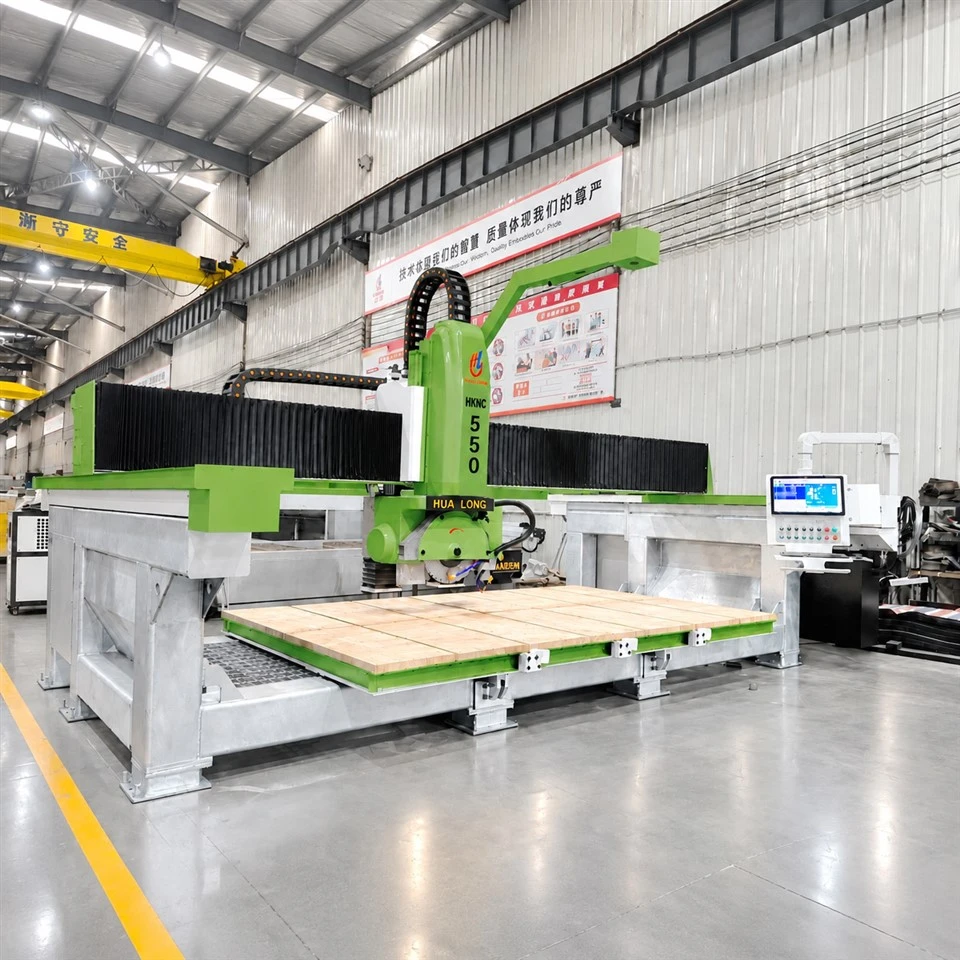
03. 4+1 / 5+1 Bridge Saws: with Milling Spindles
A 4+1 or 5+1 bridge saw combines a circular saw blade with an independent high-speed electric spindle, enabling one machine to handle slab cutting, drilling, milling, engraving, and edge profiling. Selected configurations offer a 5.5 kW spindle with speeds up to 24,000 RPM, making them useful for sink cutouts, faucet holes, decorative grooves, and other machining jobs that would otherwise require separate equipment or additional slab handling.

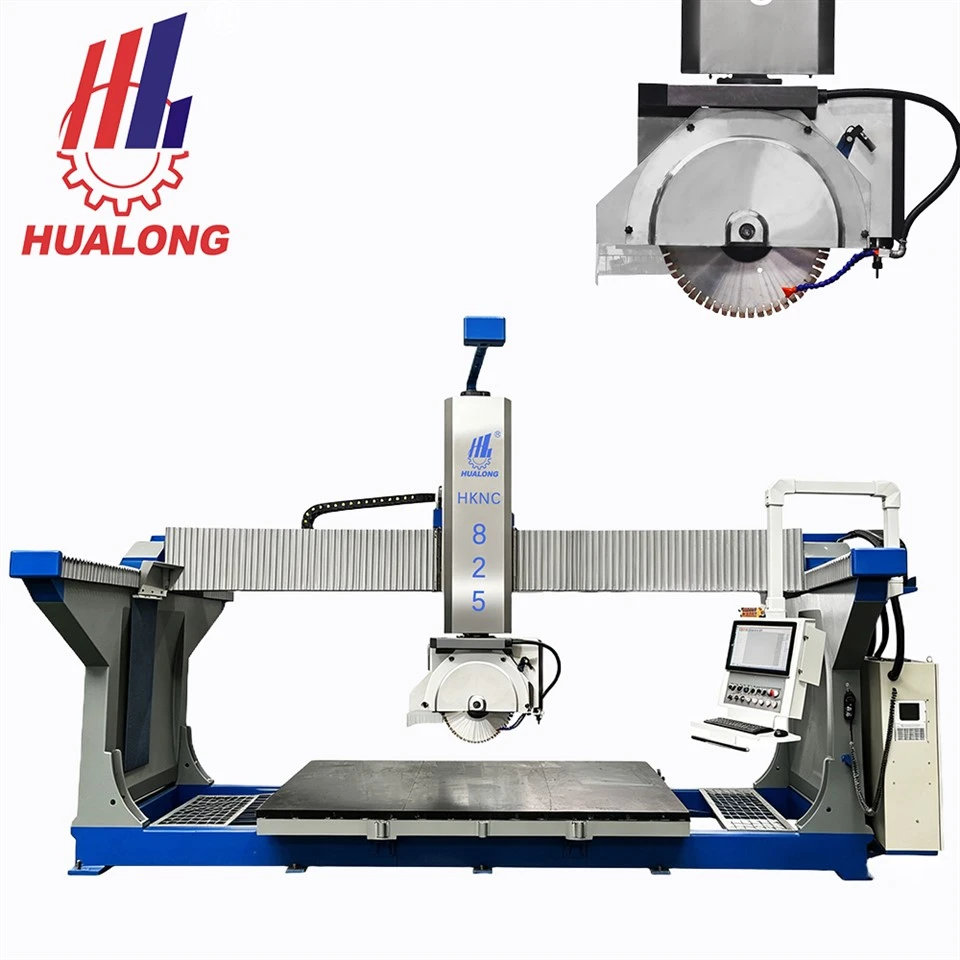
04. CNC Sawjet Machines: Combined Cutting
A CNC Sawjet integrates a circular saw blade and a high-pressure waterjet, using the saw for efficient straight cuts and the waterjet for internal corners, intricate contours, and detailed profiles. This combination is particularly useful for countertop shops processing quartz and sintered stone, where blade overcuts at internal corners can increase the risk of chipping or stress-related cracking.
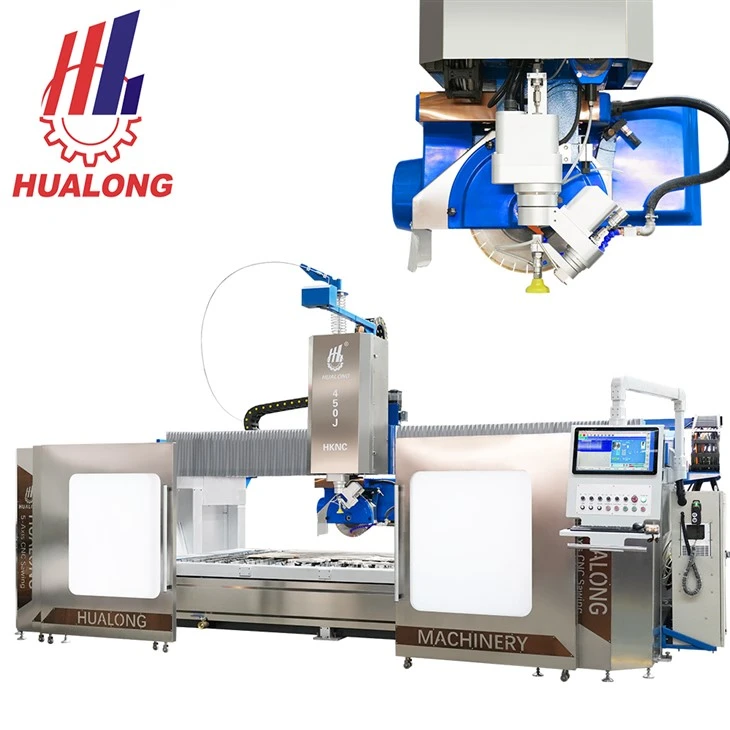
Choosing a Bridge Saw Based on Stone Material
Stone hardness, thickness, brittleness, and surface patterns all influence the cutting performance and machine configuration required for a particular job.
Granite & Basalt
These hard materials require a rigid machine frame, stable bridge structure, sufficient motor power, and compatible blade diameter to maintain cutting stability, particularly when processing thick slabs.


Marble
Since marble is relatively softer but vulnerable to edge damage, camera positioning and pattern-matching systems can help operators arrange cuts around natural veins, visible defects, and valuable surface patterns.

Quartz, Ceramic & Artificial Stone
These materials require reliable water cooling, rigid linear guides, and controlled feed rates to reduce chipping, while waterjet cutting can help handle delicate internal corners and intricate profiles.


Matching Bridge Saws to Stone Fabrication Applications
The machine should also match the finished products and machining processes your workshop handles most frequently, rather than being selected solely by its number of axes.
Kitchen Countertops & Vanity Tops
Look for 45° miter cutting and sink-opening capabilities, with an additional milling spindle or waterjet function when the production line regularly handles complex sink cutouts and faucet holes.
Custom Shapes & Decorative Stonework
A 5-axis or 5+1 CNC machine with DXF file compatibility, contour machining, pocket milling, and engraving functions is better suited to customized designs and decorative stone products.
Commercial Wall & Floor Panels
Prioritize a large working area, stable cutting performance, automatic positioning, and optional vacuum suction cups to reduce manual slab handling and improve batch-processing efficiency.
Bridge Saw Comparison: Which Type Fits Your Workshop
The following comparison highlights how the 4 main types of bridge saws for stone fabrication differ in machining capabilities and typical production applications.
|
Machine Type |
Main Strength |
Sink Cutouts |
45° Miter Cutting |
Best Fit |
|
4-Axis PLC |
Straight slab cutting |
Limited; depends on configuration |
Basic bevel cutting |
Standard slab shops |
|
5-Axis CNC |
Multi-angle & shaped cutting |
Depends on configuration |
Flexible multi-angle cutting |
Countertop fabricators |
|
4+1 / 5+1 CNC |
Cutting & milling |
Yes, with suitable spindle tools |
Available, depending on model |
Multi-process workshops |
|
CNC Sawjet |
Sawing & waterjet cutting |
Yes, including complex internal profiles |
Depends on saw configuration |
High-end custom fabrication |
The suitable slab thickness depends on the machine model, blade diameter, motor power, and cutting configuration, so buyers should confirm these specifications against their actual materials and production requirements rather than assume all machines offer the same capacity.
5 Features to Check Before Buying a Bridge Saw
Beyond cutting capacity, buyers should evaluate the machine structure, control system, optional equipment, maintenance requirements, and technical support before making an investment.
- Monoblock Structure & Installation: Check whether the machine uses an integrated frame that simplifies transportation and installation, and confirm whether foundation preparation or special workshop modifications are required.
- CNC Controller & CAD/CAM Software: Check compatibility with established control systems such as Italian ESA controllers or Siemens PLC, support for DXF file imports, and available countertop programming functions that reduce operator training time.
- Productivity-Enhancing Accessories: Consider camera positioning and slab pattern matching to improve material utilization, vacuum suction cups to reduce manual handling, and thickness probes and tool measurement systems to support accurate machining.
- Automatic Lubrication & Machine Protection: Check automatic guide rail lubrication, water-cooling arrangements, electrical protection, and dust-resistant components to maintain stable operation in demanding stone fabrication environments.
- Installation, Training & After-Sales Support: Confirm commissioning arrangements, operator training, remote technical assistance, spare parts availability, and access to qualified technicians before purchasing.
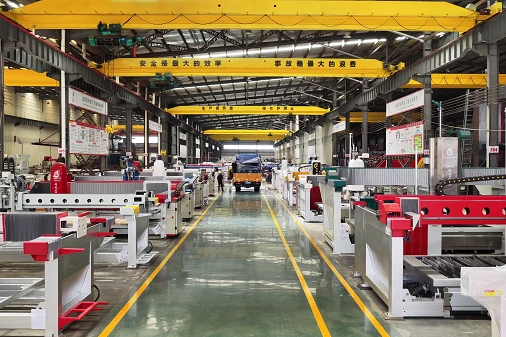
Hualong offers different bridge saw configurations, including PLC models, multi-axis CNC machines, spindle-equipped bridge saws, and integrated Sawjet systems for different stone fabrication requirements. Its product range allows buyers to compare cutting and machining capabilities when selecting equipment for countertop production, slab processing, and customized stonework.
Conclusion
Selecting the right bridge saw machines for stone fabrication starts with understanding your materials, finished products, machining processes, and expected production volume. While 4-axis PLC machines suit routine slab cutting, 5-axis CNC models, spindle-equipped bridge saws, and Sawjets provide additional capabilities for complex and multi-process fabrication. Contact the machine supplier with your stone type, slab dimensions, required machining operations, and production targets to get a bridge saw configuration that fits your workshop.
Request for Your Bridge Saw Selection