Introduction
As stone processing expands to include granite, marble, quartz, sintered stone, and large-format ceramic slabs, buyers need bridge saws that deliver consistent cutting accuracy, operational stability, and reliable performance across different materials. However, evaluating a bridge saw manufacturer requires more than comparing machine specifications, as engineering expertise, manufacturing infrastructure, quality management, and after-sales support all influence long-term equipment performance. Understanding these five areas helps buyers assess bridge saw factory capabilities and identify manufacturers that can support their production requirements.
Why Do Bridge Saw Factory Capabilities Matter to Buyers?
Choosing a bridge saw based solely on its purchase price or advertised specifications can expose buyers to risks that only become apparent after installation. A machine may meet basic cutting requirements but still cause production interruptions, inconsistent processing results, or unexpected maintenance expenses if the manufacturer lacks sufficient engineering and manufacturing capabilities. These issues can affect order fulfillment, material utilization, and overall operating costs, particularly for stone processing businesses handling high-value slabs and customized projects. Evaluating factory capabilities before purchasing helps buyers distinguish established equipment manufacturers from suppliers with limited production resources, assess the reliability of their investment, and establish a stronger foundation for long-term cooperation.
1. Engineering & Design Capabilities: Evaluate the Machine Beyond Basic Cutting
A manufacturer's engineering capabilities determine whether its bridge saws can handle different materials, cutting dimensions, and fabrication requirements.
Mechanical Structure & Cutting Stability
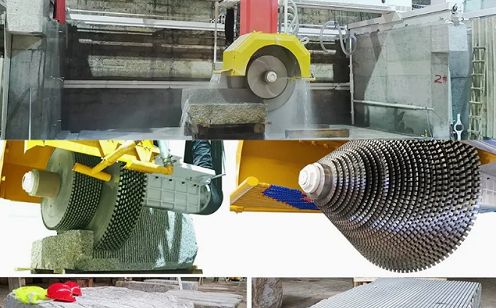
Examine the machine frame, bridge structure, linear guides, spindle, and transmission components to determine whether the design provides sufficient rigidity and minimizes vibration during heavy-duty cutting operations.
Multi-Axis Cutting & Processing
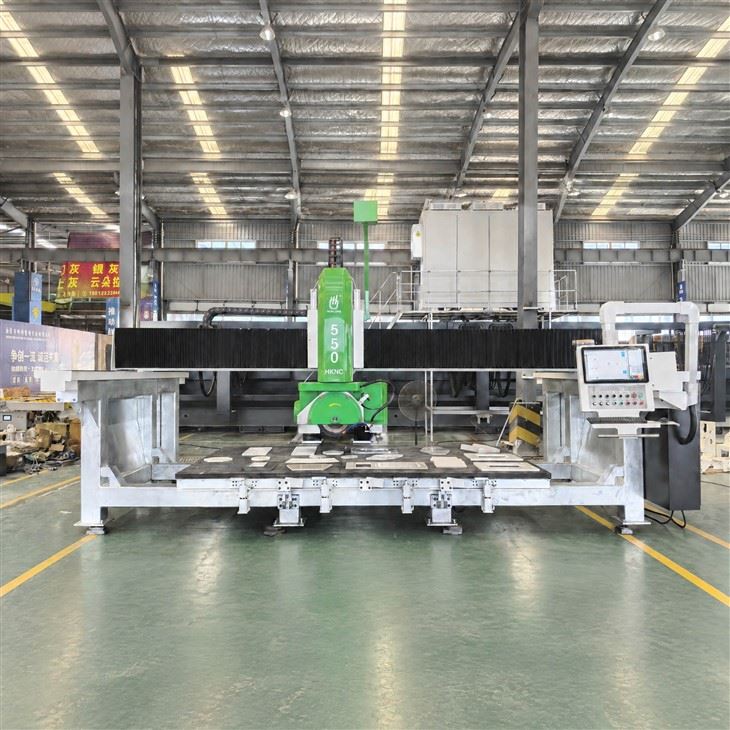
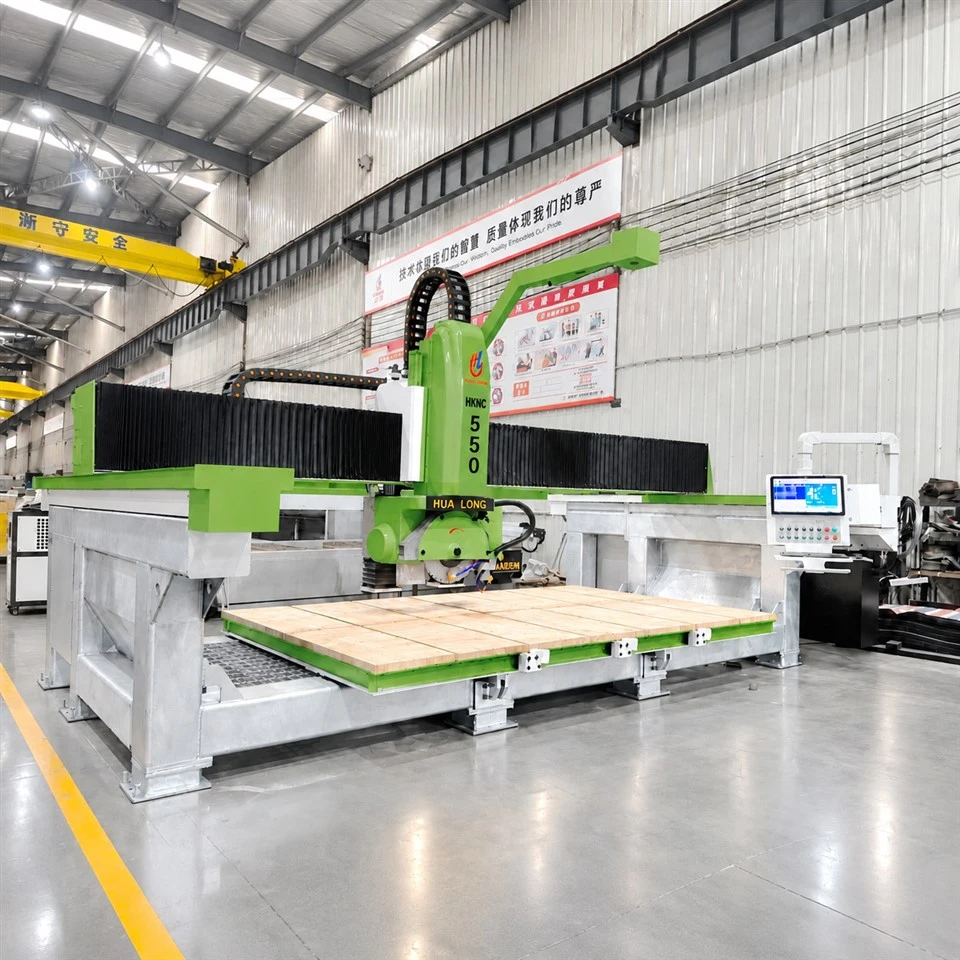
Check the available axis configurations, blade rotation and tilting capabilities, and support for 45° miter cutting, curved cutting, and other machining operations required for customized stone fabrication.
Material & Size Compatibility
Verify compatibility with granite, marble, quartz stone, sintered stone, and ceramic slabs, while comparing maximum cutting dimensions and thickness against the manufacturer's actual model specifications, such as the 3,300 mm maximum cutting length and 140 mm maximum cutting thickness.
2. CNC Integration & Automation: Check the Control System and Optional Features
Beyond mechanical design, a capable manufacturer should be able to integrate control systems, CAD/CAM software, and automation modules into practical stone processing workflows.
CNC Hardware & Software Integration
Evaluate the integration of Italian ESA CNC systems, Pegasus CAD/CAM software, and Siemens PLC controls where applicable, focusing on their roles in machining instructions, motion coordination, and production management.
Vision-Based Positioning & Nesting
Check whether camera positioning and pattern-matching functions can identify slab textures, improve cutting layouts, support vein matching, and reduce material waste during customized fabrication.
Optional Automation Modules
Review available configurations such as vacuum suction handling, slab thickness probes, and tool measurement systems to determine whether the equipment can reduce manual intervention and accommodate future automation requirements.
3. Manufacturing Infrastructure: Verify the Factory's Actual Production Capacity
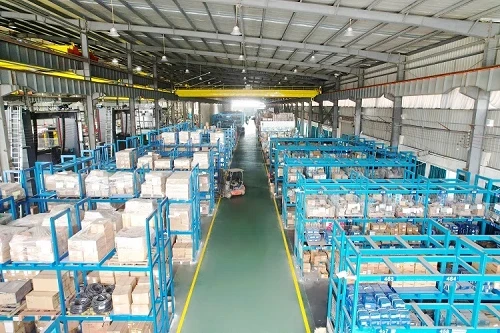
A manufacturer's production infrastructure determines whether it can manufacture, assemble, and deliver bridge saws consistently, particularly when handling large or repeat orders.
In-House Manufacturing & Assembly
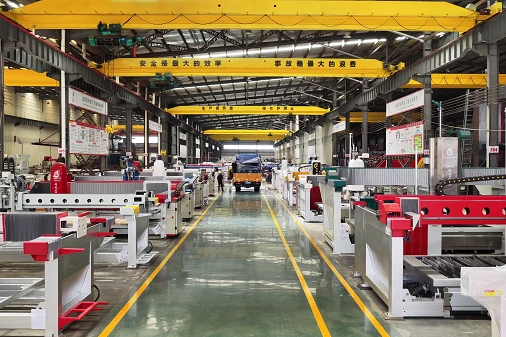
Check whether the factory operates dedicated facilities for raw material processing, precision machining, bridge saw assembly, and component storage, rather than relying heavily on external suppliers for essential manufacturing stages.
Factory Scale & Engineering Team
Evaluate the production site's size, workforce, and technical team, with a 50,000+ m² manufacturing facility and 300+ employees providing a useful reference for assessing large-scale production resources and engineering support.
Production Capacity & Component Supply
Examine production scheduling, component sourcing, inventory management, and assembly arrangements to determine whether the manufacturer can maintain consistent production schedules and handle multiple equipment orders without unnecessary delays.
4. Quality Control, Certifications & Industry Recognition
Buyers should look for documented quality management procedures, verifiable technical achievements, and relevant certifications rather than relying solely on a manufacturer's quality claims.
Quality Inspection & Testing
Review how the factory conducts incoming material inspections, machining accuracy checks, assembly inspections, electrical safety checks, and complete machine operation tests before equipment leaves the production facility.
Patented Technologies & Industry Standards
Examine the manufacturer's patent portfolio and participation in industry standard development, as 87 valid patents, including 10 invention patents, and contributions to national and industry standards can demonstrate sustained technical development.
International Certifications & Compliance
Verify the validity and applicable scope of ISO 9001:2015, ISO 14001:2015, and CE certifications to determine whether the manufacturer's management systems and equipment meet relevant quality, environmental, and market access requirements.
5. Global After-Sales Support: Assess Long-Term Service Availability
For overseas equipment buyers, after-sales support should cover installation, operator training, technical troubleshooting, and spare parts throughout the machine's service life.
Installation & Operator Training
Confirm whether the manufacturer provides installation guidance, commissioning assistance, operating instructions, and technical training to help local teams operate the bridge saw correctly.
Remote Troubleshooting & Local Service
Check the availability of remote technical consultation, fault diagnosis, authorized distributors, and local service partners who can assist when equipment problems affect production.
Spare Parts & Warranty Coverage
Clarify the warranty period, coverage exclusions, spare parts availability, replacement procedures, and expected supply arrangements before signing the purchase agreement.
Comprehensive Service & Support
Bridge Saw Factory Evaluation Checklist: What Should Buyers Verify?
Before selecting a supplier, buyers should request specific documents and evidence to verify the manufacturing capabilities discussed above.
|
Evaluation Area |
Documents or Evidence to Request |
|
Engineering & Design |
Technical specifications, machine drawings, cutting demonstrations |
|
CNC & Automation |
Control system details, software configurations, optional equipment list |
|
Manufacturing |
Factory tour, production facilities, assembly records |
|
Quality & Compliance |
Inspection records, certification documents, patent information |
|
After-Sales |
Warranty terms, service coverage, spare parts availability |
When reviewing a manufacturer's claims, buyers should cross-check technical specifications against actual machine demonstrations, compare certification documents with the issuing organizations' records, and confirm that quoted configurations match the final purchase agreement. Requesting written confirmation of production specifications, inspection procedures, delivery commitments, and warranty terms also helps prevent misunderstandings before placing an order.


Conclusion
A bridge saw's long-term performance depends not only on its technical specifications but also on the manufacturer's engineering expertise, production capacity, quality management, and after-sales support. Evaluating these capabilities helps buyers reduce procurement risks and select equipment suppliers that can support their stone processing operations over time. Contact our team to discuss your cutting requirements, compare bridge saw configurations, and request a tailored equipment quotation.
Put Hualong into Your Checklists