Introduction
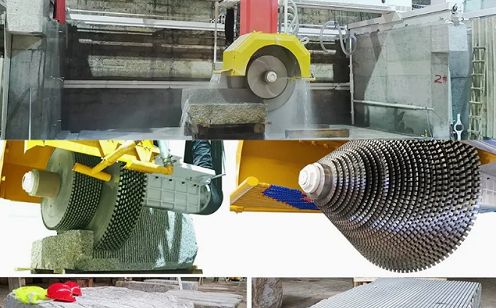
Stone fabrication workshops are facing growing demands for precise cutting, complex countertop designs, and shorter production lead times, especially when processing quartz, granite, marble, and sintered stone slabs. Traditional bridge saws can handle basic cutting tasks, but additional operations such as sink-corner milling, faucet-hole drilling, and angled edge processing often require separate equipment and repeated workpiece handling. Modern CNC bridge saw machines, particularly 5+1-axis models, combine multi-angle saw cutting with additional machining capabilities to help fabricators expand their production capacity and handle more custom stonework.
5 Key Benefits of CNC Bridge Saw Machines
Modern CNC bridge saws offer more than automated slab cutting, with their machining capabilities, motion control, and auxiliary systems directly affecting production efficiency and finished-product quality.
1. More Machining Operations in One Machine
A 5+1-axis CNC bridge saw combines a multi-axis saw blade system with an independent electric spindle, allowing one machine to perform straight cutting, 45-degree mitre cutting, sink-corner milling, faucet-hole drilling, and engraving, reducing workpiece transfers between separate machines and shortening the countertop fabrication process. For example, the 5 Axis CNC Countertop Cutting Machine uses a 5.5 kW high-speed electric spindle with a maximum speed of 24,000 rpm to handle additional milling, drilling, and engraving operations alongside conventional saw cutting.

2. Consistent Cutting Accuracy for Complex Designs
An Italian ESA CNC system, Pegasus CAD/CAM software, dual-servo Y-axis drive, and linear guides with ball screws support coordinated machine movement, while the C-axis RV reducer provides a specified positioning accuracy of ±0.005° for rotary positioning during multi-angle machining. These features help fabricators manage curved edges, polygonal shapes, circular cutouts, and mitred joints with more consistent positioning, reducing manual adjustments and corrective work during production.
3. Better Slab Layout and Material Utilization
A camera positioning system can capture the actual slab surface so operators can arrange cutting patterns around natural veins, visible cracks, and material defects, while an optional vacuum suction cup helps hold and position workpieces during machining. This combination is particularly useful when processing expensive natural stone and large-format sintered slabs, where better layout planning and reduced unnecessary cutting can improve usable material yield and lower material waste; the 5 Axis CNC Bridge Saw provides these positioning and layout functions as part of its available configuration.

4. Handle Different Stone Thicknesses and Custom Jobs
CNC bridge saw machines are available with different cutting capacities, allowing workshops to match equipment to their typical materials and product dimensions rather than paying for unnecessary capacity or limiting their future orders. A 150 mm maximum cutting thickness is suitable for many standard countertop fabrication jobs, while a machine equipped with a 500 mm saw blade and 280 mm maximum cutting thickness can handle substantially thicker stone components, including demanding natural-stone and architectural fabrication work.
5. Simplify Daily Operation and Routine Maintenance
A 21.5-inch touchscreen console, multilingual operating interface, and DXF drawing support make it easier for operators to prepare machining programs and manage production tasks without relying entirely on manual operation. Optional slab thickness detection and tool measurement systems help establish machining parameters, while scheduled automatic lubrication reduces routine maintenance work and supports smoother movement of the machine's mechanical components.
CNC Bridge Saw Production Capacity, Operating Costs, and ROI
Equipment investment should be evaluated through actual production requirements, processing costs, and the additional profit that a workshop can generate rather than through machine specifications alone.
Production Capacity Based on a Cutting Example
Using the HKNC-825 Plus production model, a 3500 × 2100 × 20 mm slab can theoretically produce 3 countertop blanks measuring 3000 × 600 mm, with an estimated 24-minute cutting cycle producing approximately 20 slabs or 60 blanks during an eight-hour shift. At 26 working days per month, this represents a theoretical monthly output of 520 slabs or 1,560 countertop blanks, provided that the assumed cycle time and production conditions remain achievable.
|
Production Indicator |
Estimated Output |
|
Slabs per 8-hour shift |
20 |
|
Countertop blanks per shift |
60 |
|
Slabs per month |
520 |
|
Countertop blanks per month |
1,560 |
Estimated Processing Cost per Slab
Based on a US industrial electricity rate of $0.0862/kWh and a manufacturing wage benchmark of $22.20/hour, the model estimates electricity costs of $0.90 and labor costs of $8.88 per slab, resulting in a combined processing cost of $9.78 per slab or approximately $3.26 per countertop blank. These figures cover electricity and direct labor only, so buyers should also account for tooling, maintenance, consumables, depreciation, and other operating expenses when calculating their actual unit costs.
How Long Does It Take to Recover the Investment
Using an illustrative machine investment of $55,000, the estimated payback period ranges from 27.5 months at $2,000 in additional monthly net profit to 11 months at $5,000, while a monthly net profit increase of $3,000 would recover the investment in approximately 18.3 months. These estimates are not guaranteed returns because actual payback depends on order volume, machine utilization, material costs, labor arrangements, and the workshop's ability to secure additional profitable orders.
How to Choose the Right CNC Bridge Saw for Your Workshop
The right machine depends on the stone thickness you process, the complexity of your orders, and whether your workshop focuses on countertop production or heavier custom stonework.
HKNC-550 Plus: Countertop Fabrication
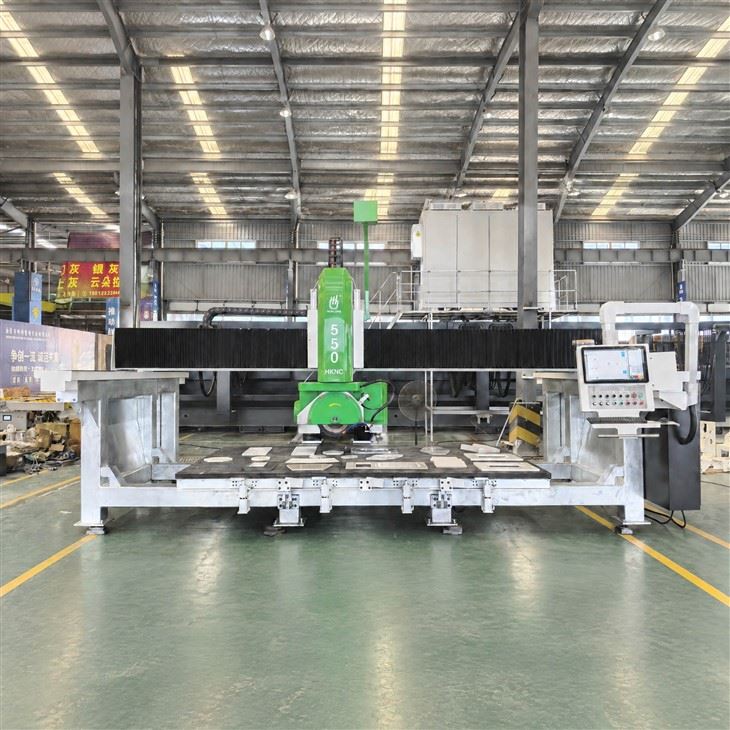
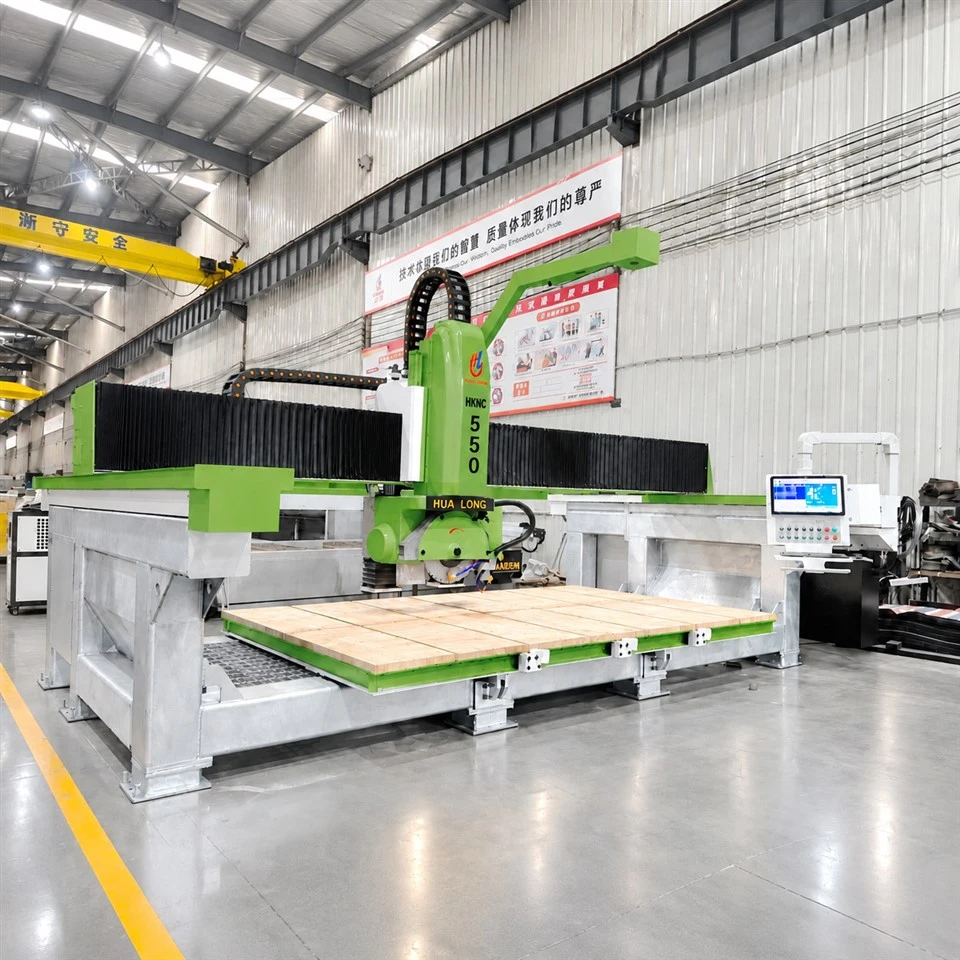
The HKNC-550 Plus is designed for workshops producing kitchen countertops, bathroom vanity tops, and custom stone components, with a 5+1-axis cutting system, an independent 5.5 kW electric spindle, and a maximum cutting thickness of 150 mm. Its 350–550 mm saw blade range, 3500 × 2100 mm working platform, and ability to perform sink-corner milling, faucet-hole drilling, and mitre cutting make it suitable for fabricators handling varied countertop orders.
HKNC-825 Plus: Thick Stone & Heavy-Duty Processing
For workshops processing thick granite, marble, and custom stone components, the HKNC-825 Plus offers a 500 mm saw blade, a maximum cutting thickness of 280 mm, a 26.4 kW main motor, and a 5.5 kW retractable electric spindle. Its greater cutting capacity makes it a better fit for thick stone products, decorative components, and demanding architectural stonework, while its five-axis cutting system supports straight, bevel, and more complex programmed cutting paths.
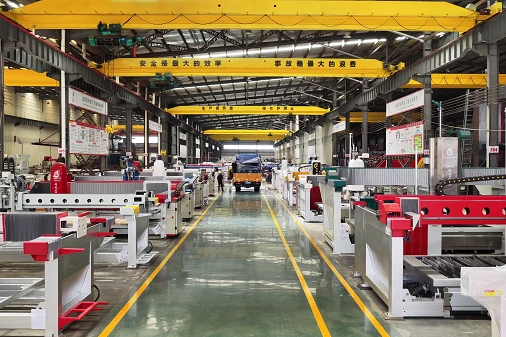
Hualong provides CNC bridge saw manufacturing, machine configuration, and technical support for stone fabrication applications, helping buyers match cutting capacity, spindle functions, and machine configurations to their actual production requirements. Its equipment range covers both countertop fabrication and thick-stone processing, giving workshops options for different materials, product dimensions, and machining needs.
Conclusion
CNC bridge saw machines help stone fabricators combine multi-angle cutting, additional machining operations, and automated positioning to improve production flexibility and control processing costs. Whether you need a versatile countertop cutting machine or a heavy-duty solution for thick stone components, selecting the right configuration is essential to achieving a practical return on investment. Send us your DXF drawings, stone material, slab dimensions, and expected production volume to receive a suitable machine recommendation, production assessment, and quotation.
Start Your Bridge Saw Project Now
FAQ
Q: Can CNC Bridge Saw Machines Cut Quartz, Granite, and Marble?
A: Yes, suitable CNC bridge saw configurations can process quartz, granite, and marble, provided that the blade, tooling, and cutting parameters match the material properties and thickness.
Q: Can a 5-Axis CNC Bridge Saw Perform 45-Degree Mitre Cuts?
A: Yes, its saw head can tilt from 0° to 90° and rotate through 360°, allowing it to perform 45-degree mitre cuts and other programmed angled cutting operations.
Q: What Can the Electric Spindle Do on a CNC Bridge Saw?
A: An independent electric spindle can perform milling, drilling, and engraving with suitable tools, including faucet-hole drilling, sink-corner milling, and other detailed countertop machining operations.