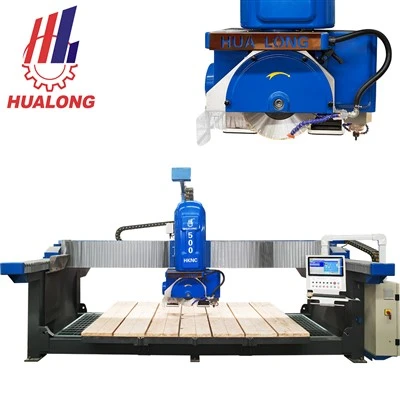
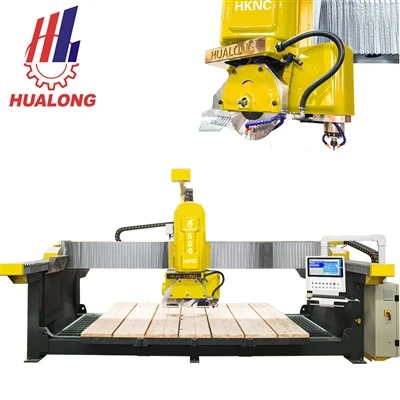
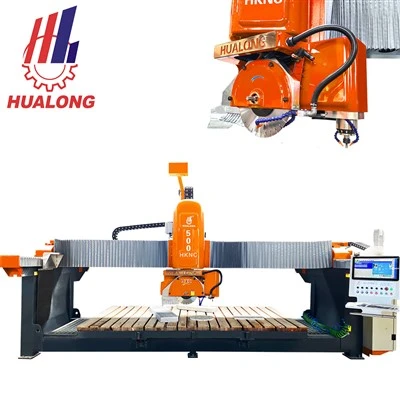
Stone polishing machines are core specialized equipment in the field of deep stone processing. They come in a wide variety of types and models, and are widely used in the grinding, polishing, and finishing of various types of stone, such as marble and granite. Based on different classification standards, mainstream stone polishing machines can be divided into several types. The structural characteristics and applicable scenarios of each type of equipment differ significantly. Specific classification details are as follows:
I. Classification by Slab Movement Method
Based on the movement of the stone slabs during operation, they can be divided into two main categories: mobile polishing machines and stationary polishing machines.
Mobile Polishing Machines: The core model is the fully automatic continuous stone polishing machine. During operation, the stone slabs are laid flat on the conveyor equipment, and the conveyor belt moves the slabs at a uniform speed. The polishing module completes the continuous polishing operation, suitable for large-scale assembly line processing.
Stationary Polishing Machines: The bridge-type polishing machine is a typical example. During operation, the stone slabs are fixed to the machine's worktable throughout the process. The surface of the slab is ground and polished in all directions through the autonomous movement of the grinding and polishing head. The equipment has high stability and higher polishing precision.
II. Classification by Number of Polishing Heads
Based on the number of polishing heads, polishing machines can be classified into single-head polishing machines and multi-head polishing machines.
Single-head polishing machines: These include manual portable polishing machines and bridge-type single-head polishing machines. They feature a simple structure, flexible operation, and are suitable for polishing small areas, irregularly shaped parts, and scattered slabs.
Multi-head polishing machines: The mainstream model is the double-head bridge-type polishing machine. Multiple grinding heads working together significantly improve polishing efficiency and provide better grinding uniformity, making them suitable for large-scale processing of standardized stone slabs.
III. Classification by Automation Level
Combining operating mode and automation level, polishing machines can be classified into manual polishing machines and automatic polishing machines.
Manual polishing machines: These mainly consist of handheld polishing equipment and various simple polishing tools. Polishing is completed manually. They are low-cost, widely adaptable, and often used for local repairs, edge grinding, and small-batch processing.
Automatic Polishing Machine: A fully automatic, continuous professional polishing equipment designed specifically for natural stones such as marble and granite. It integrates feeding, grinding, polishing, and discharging into a single, automated process, offering high processing efficiency and consistent product quality. It is the main equipment for large-scale stone processing.
IV. Classification by Abrasive Composition
Based on the abrasive material and function of the polishing head, polishing machines can be divided into stone calibration machines and ordinary polishing machines. The performance differences between the two are significant.
Stone Calibration Machine: Primarily used for rough grinding and leveling, specifically designed for grinding and correcting stone slabs with high surface roughness and poor flatness. The machine's grinding head is equipped with diamond abrasive, providing high grinding force and cutting depth, quickly correcting surface defects and laying the foundation for fine polishing.
Ordinary Polishing Machine: Focuses on the fine polishing process. The grinding head mainly uses conventional abrasives such as silicon carbide and corundum. It offers gentle grinding force, a delicate polishing texture, and significantly lower abrasive consumption than calibration machines, making it suitable for finishing and brightening stone slabs.
V. Classification by Polishing Method
Based on the work area and polishing method, polishing machines can be divided into flat surface polishing machines and edge polishing machines.
Flat surface polishing machines: Primarily used for the overall grinding, polishing, and finishing of stone slabs, ensuring the flatness and gloss of the slab surface.
Edge polishing machines: Specifically designed for polishing the edges and cut areas of stone slabs. They can trim burrs on the edges and corners, polish right angles or chamfers, improving the regularity and aesthetics of the finished stone edges.
VI. Classification by Surface Shape
Based on the geometric shape of the stone surface, polishing machines can be divided into flat surface polishing machines and irregular shape polishing machines.
Flat surface polishing machines: Designed for regular flat stone slabs, focusing on polishing various regular flat stone slabs, suitable for mass production of standardized slabs.
Irregular shape polishing machines: Primarily used for the fine processing of curved, arc-shaped, and other irregularly shaped stone slabs. These machines are mostly equipped with CNC systems, accurately adapting to the polishing needs of various complex shapes, offering extremely high processing precision and flexibility.