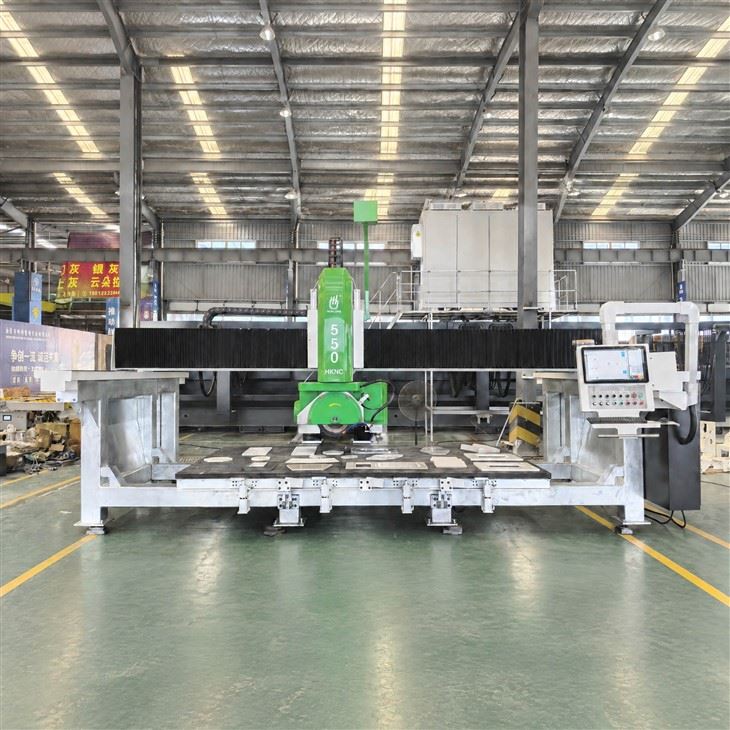
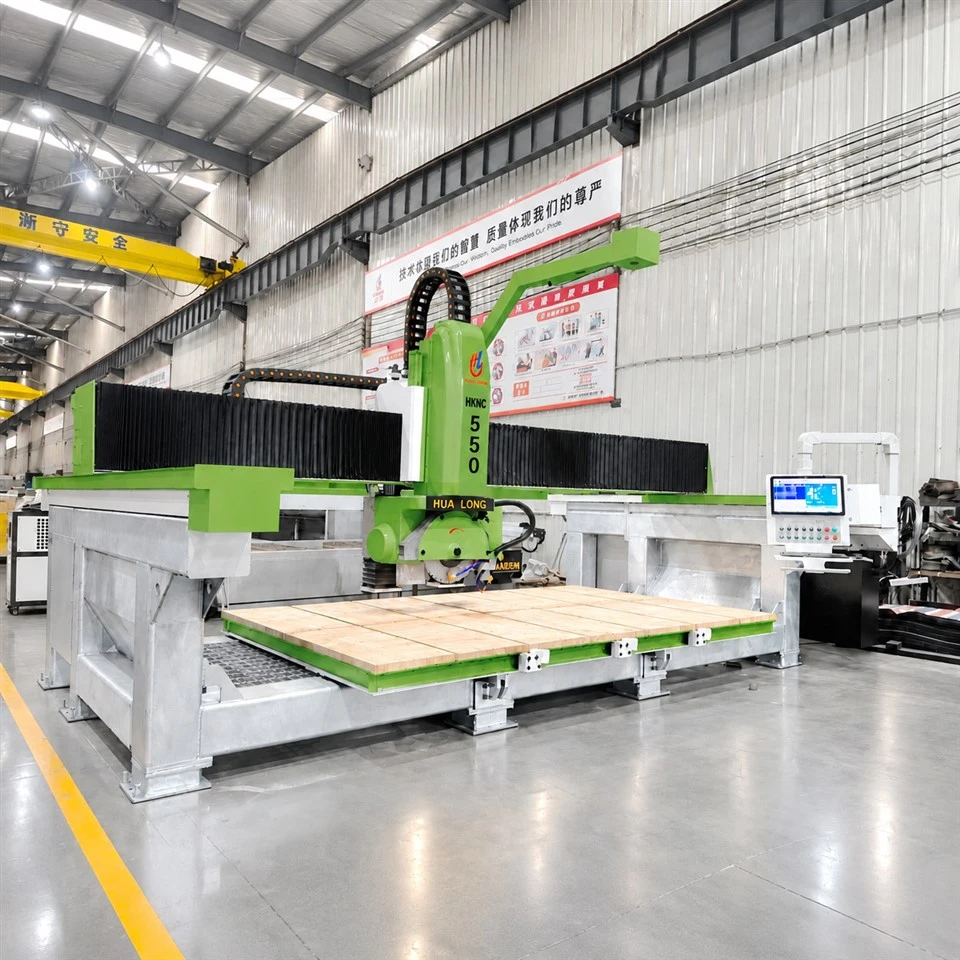
Introduction
For stone processing factories, profitability depends not only on raw block costs but also on slab yield, cutting accuracy, and material waste. Granite, marble, basalt, and quartz have different hardness levels, internal structures, and cutting characteristics, making a single cutting setup unsuitable for every material. A well-planned block cutting workflow helps manufacturers select appropriate equipment, maintain consistent slab quality, and improve production efficiency.
5 Steps of a Standard Stone Block Cutting Workflow
A reliable stone block cutting process involves five stages, from raw block inspection to finished slab quality control, with each stage affecting material utilization and cutting stability.
Inspect block dimensions, visible cracks, internal defects, and vein directions before determining the cutting orientation and slab thickness required for the intended application.
Use a heavy-duty loading system to position the block on the cutting table, ensuring adequate support and secure clamping to prevent movement or tilting during cutting.
Configure the target slab thickness, blade spacing, wire tension, and cutting speed through the machine control system, with Siemens PLC technology helping operators manage automated cutting settings on compatible equipment.
Maintain an appropriate water supply to remove cutting debris and heat while controlling feed speed, guide movement, and wire tension to prevent excessive tool wear and uneven cutting.
Unload the slabs using suitable lifting equipment, then inspect thickness consistency, surface flatness, edge condition, and visible cracks before transferring acceptable slabs to polishing or further processing.
How to Choose the Right Cutting Method for 4 Stone Types
The right stone block cutting machine depends on material hardness, abrasiveness, block dimensions, target slab thickness, and daily production volume rather than hardness alone.
Granite Block Cutting: Balancing Hardness and Production Capacity
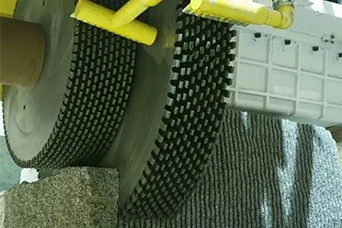
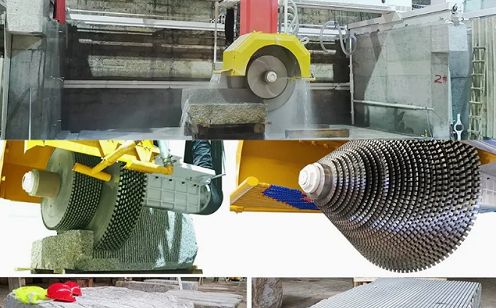
Granite contains hard mineral components, including quartz, that increase tool abrasion and cutting resistance, making diamond multi-wire saws, heavy-duty gang saws, and multi-blade cutting machines suitable options depending on production requirements, while wire tension, feed speed, and cooling conditions require close control.
Marble Block Cutting: Protecting Valuable and Crack-Prone Material
Marble is generally easier to cut than granite but can contain natural fractures and brittle areas, so gang saws suit conventional slab production while super-thin multi-wire saws offer an advantage when factories need to reduce kerf loss and produce thinner slabs with less material waste.
Basalt Block Cutting: Managing High Cutting Resistance
Basalt's dense structure and potentially uneven distribution of pores can increase cutting resistance and equipment loads, so factories should evaluate heavy-duty multi-blade machines or suitable diamond cutting systems through actual cutting tests, paying particular attention to feed pressure, blade condition, and cooling capacity.
Quartz & Quartzite Block Cutting: Controlling Abrasion and Heat
Natural quartzite requires cutting solutions capable of handling high abrasiveness, whereas engineered quartz contains resin binders that introduce additional heat-management considerations, making it essential to assess the material composition, tool compatibility, cutting speed, and cooling requirements before selecting a multi-blade or diamond multi-wire system.
Traditional Cutting vs. Ultra-Thin Multi-Wire Technology
Traditional gang saws and conventional cutting systems remain practical for established production lines, but ultra-thin multi-wire technology offers an alternative for factories seeking higher material utilization and thinner slabs.
Narrower Cutting Kerf
The HLMW series uses 0.3–0.8 mm diamond wires, with a manufacturer-specified cutting kerf of approximately 0.4–0.7 mm, helping reduce the material lost between adjacent slabs compared with conventional wider-kerf methods.
Higher Material Utilization
Less material removed during each cutting pass can increase the number of saleable slabs obtained from a block, making kerf reduction particularly valuable when processing expensive granite and marble.
Improved Cutting Consistency
Individual wire tension control helps maintain more consistent cutting conditions across multiple wires, reducing the risk of uneven slab thickness and wavy surfaces.
The equipment manufacturer also promotes ultra-thin multi-wire technology for slabs below 10 mm, although actual output, yield, and cutting quality depend on the material, block condition, and operating parameters.
Common Stone Cutting Problems and How to Prevent Them
Cutting defects often result from a combination of incorrect operating parameters, mechanical instability, tool wear, and insufficient maintenance.
Uneven Slabs & Wavy Cutting Surfaces
Inspect guide alignment, mechanical clearances, wire tension, and block positioning to identify sources of cutting deviation.
Excessive Tool Wear & Overheating
Check cooling water flow, nozzle blockage, cutting speed, feed pressure, and whether the selected diamond tool matches the stone's abrasiveness.
Edge Chipping & Block Movement
Verify clamping pressure and block support, and reduce excessive feed speed when processing brittle or naturally fractured materials.
Unexpected Wire / Blade Breakage
Check tension settings, tool wear, abnormal vibration, and overload conditions before restarting the cutting cycle.
How to Select a Stone Block Cutting Machine for Your Factory
Before purchasing a stone block cutting machine, evaluate three factors that directly affect equipment suitability and long-term production costs.
1. Material & Production Requirements
Identify your main stone types, daily processing volume, and finished product range to determine whether production capacity, thin-slab capability, or material utilization should take priority.
2. Block Dimensions & Target Slab Thickness
Confirm the maximum block length, width, and height, together with the required slab thickness, cutting width, and available workshop space, before checking the machine's actual processing capacity.
3. Machine Configuration & Technical Support
Compare spindle power, blade or wire configuration, PLC controls, tension management, cooling systems, installation requirements, and access to replacement parts when evaluating different machine suppliers.
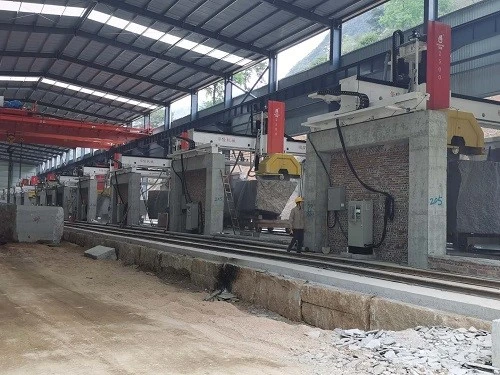
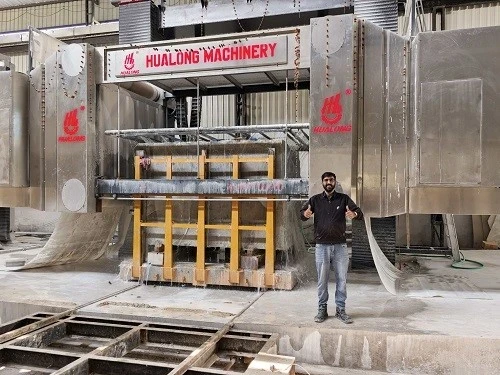
For factories comparing equipment configurations, Hualong offers multi-blade cutting machines, gang saws, diamond multi-wire saws, and super-thin multi-wire saws for different stone processing requirements. Its equipment selection can be evaluated against block dimensions, target slab thickness, and production objectives, allowing buyers to discuss suitable machine configurations rather than choosing solely by model specifications.

Conclusion
An efficient block cutting workflow requires the right combination of material assessment, machine configuration, cutting parameters, and quality control. Granite, marble, basalt, and quartz each present different processing challenges, so equipment selection should reflect actual production conditions rather than a one-size-fits-all approach. Contact the technical team with your stone type, block dimensions, target slab thickness, and daily production requirements to request a customized cutting solution and equipment quotation.
Get a Block Cutting Workflow for Your Block