Introduction
Choosing the right granite block cutting machine is essential for maintaining slab quality, controlling material waste, and meeting production targets. Because granite is hard and abrasive, manufacturers need equipment that delivers stable cutting, consistent slab thickness, and reliable performance under continuous operation. The best machine depends on block dimensions, required slab thickness, daily output, and the factory's investment budget.
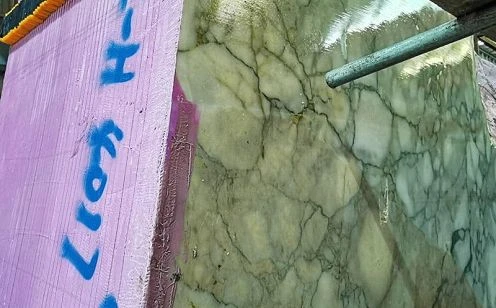
3 Types of Granite Block Cutting Machines for Slab Production
Granite slab manufacturers can choose from three main cutting technologies, each offering different advantages in production flexibility, cutting efficiency, and material utilization.
Multi-Blade Block Cutter for Flexible Slab Production
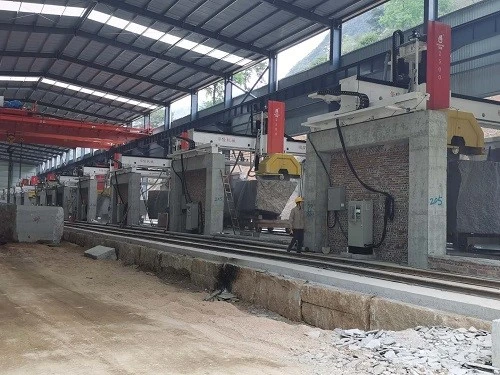
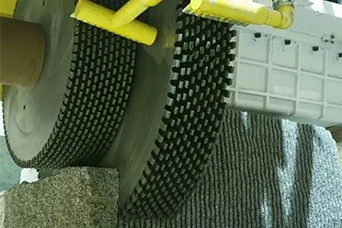
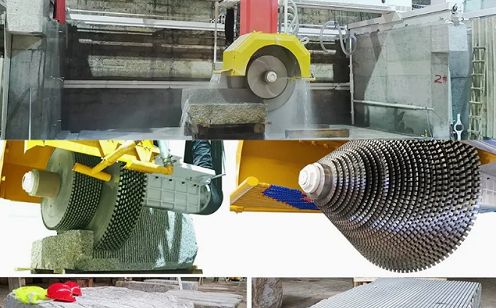
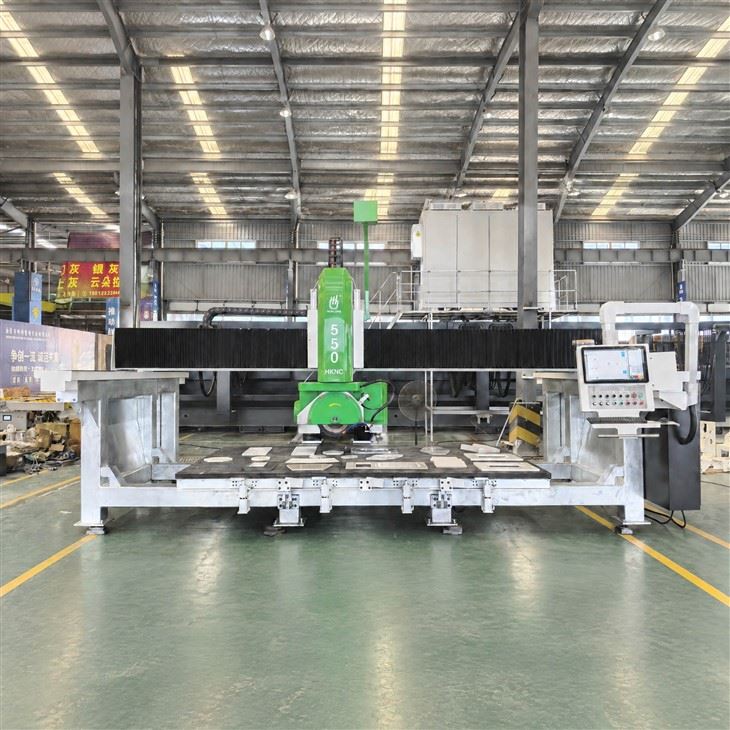
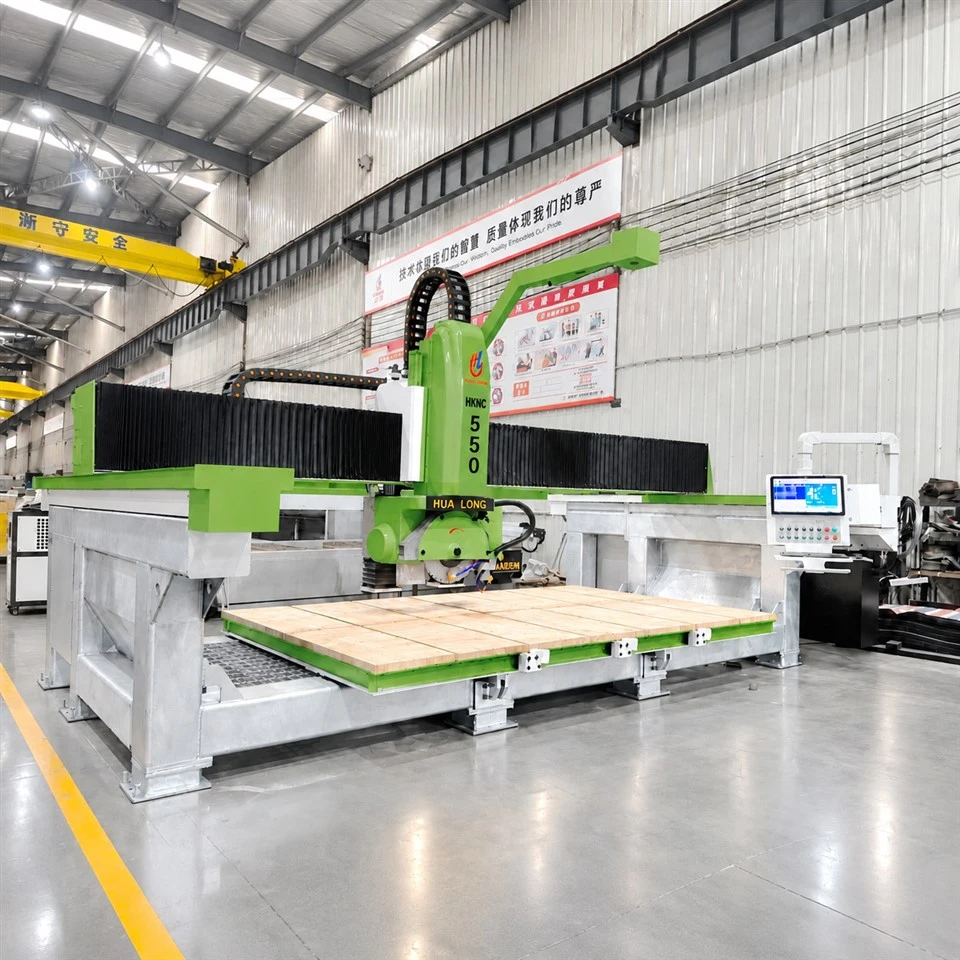
The HLQH-2500 multi-blade block cutter uses multiple diamond circular blades to cut stone blocks into parallel slabs, making it suitable for factories handling different slab specifications and production requirements. The machine offers a cutting length of 3,500 mm and a cutting width of 2,000 mm, while its Siemens PLC control system and Hiwin linear guides with oil-bath lubrication support accurate feeding and stable operation. Manufacturers can adjust the blade configuration to accommodate different cutting requirements, making this equipment suitable for flexible slab production involving granite, basalt, marble, and quartz.

Diamond Multi-Wire Saw for Higher Material Utilization
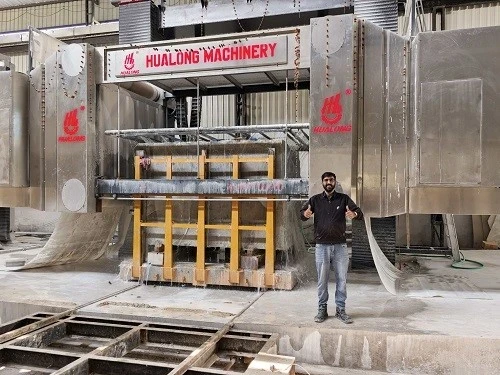
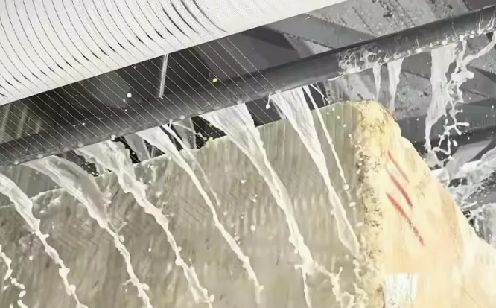
A diamond multi-wire saw uses multiple diamond-beaded steel wires to cut several slabs simultaneously, offering an efficient solution for large-scale granite block processing. The HLMW Series uses 6.3–7.2 mm diamond wire cables and a precision tensioning system to maintain consistent cutting conditions and reduce the risk of wire breakage. Its continuous water-jet system cools the wires and removes cutting slurry, while the manufacturer indicates raw material savings of up to 3% per granite block compared with conventional cutting methods.

Super Thin Multiwire Machine for High-Value Slab Production
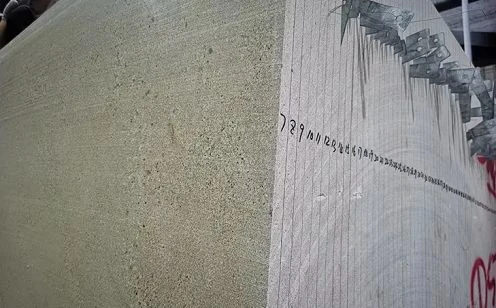
A super thin multiwire machine uses fine-diameter diamond wires to reduce cutting kerf and recover more usable material from valuable granite blocks. The HLMW-100/150 supports 0.3–0.8 mm diamond wire configurations and slab thicknesses from 5 mm to 30 mm, with specialized configurations for producing slabs under 10 mm. Its narrow cutting kerf of approximately 0.4–0.7 mm and the material yield above 97% make it particularly suitable for high-value stone processing, where material utilization has a direct impact on production profitability.

Granite Block Cutting Machine Comparison: Which One Fits Your Factory
The following comparison highlights the differences between the three technologies and helps manufacturers narrow down their equipment choices.
|
Comparison Factor |
Multi-Blade Cutter |
Diamond Multi-Wire |
Super Thin Multiwire |
|
Cutting Method |
Diamond circular blades |
Diamond wires |
Fine diamond wires |
|
Main Production Focus |
Flexible production |
Conventional granite slabs |
Thin, high-value slabs |
|
Slab Thickness |
Configuration dependent |
20/30 mm configurations |
5–30 mm |
|
Material Utilization |
Depends on blade kerf |
Up to 3% material savings |
97%+ yield |
|
Main Investment Priority |
Production flexibility |
Efficiency and material savings |
Premium material recovery |
These figures are model-specific references rather than universal performance guarantees, and buyers should compare actual cutting results using the same granite type, block dimensions, and finished slab specifications.
5 Technical Factors to Check Before Buying a Granite Cutting Machine
A machine's advertised cutting capacity does not guarantee consistent slab quality, so buyers should evaluate the following mechanical and electrical details before placing an order.
A heavy-duty steel frame, stable support structure, and effective vibration damping help maintain cutting accuracy under high loads, reducing the risk of uneven slab thickness and poor surface flatness.
Check whether linear guides have adequate sealing, dust protection, and continuous lubrication, as granite powder can accelerate wear and affect positioning accuracy during long-term operation.
For multi-wire machines, ask about tension monitoring, automatic adjustment, and precision feeding controls, which help maintain consistent cutting conditions and reduce the risk of wire breakage.
A continuous water supply should reach the cutting area effectively to control heat, protect diamond tools, and remove stone slurry before it interferes with cutting performance.
Check the PLC or CNC control system, overload protection, emergency stops, blade guards, and other safety devices, and request the relevant CE documentation for the specific machine configuration.
Hidden Costs That Affect Granite Slab Production Profitability
The purchase price is only one part of the investment, because diamond tool consumption, material loss, installation requirements, and maintenance can significantly affect the cost per square meter of finished slabs.
Diamond Tool Consumption & Material Loss
Compare blade, diamond bead, and wire replacement costs alongside kerf width and usable slab output, as lower tool prices may be offset by greater material losses when processing expensive granite.
Installation & Factory Requirements
Confirm the machine's floor space, workshop height, electrical capacity, block-handling equipment, water supply, and slurry drainage requirements before ordering to avoid unexpected installation and infrastructure expenses.
Maintenance & After-Sales Support
Ask about spare parts availability, installation guidance, operator training, technical troubleshooting, and warranty coverage, then include potential downtime in the total operating cost calculation.
Hualong has over 35 years of stone machinery manufacturing experience, supported by machining and assembly facilities and pre-delivery quality inspections. Its stone block cutting equipment is supplied with CE-certified configurations, overseas technical support, and customization options for cutting dimensions, motor power, and blade or wire configurations.
Conclusion
Selecting a granite block cutting machine requires more than comparing blade numbers, motor power, or advertised production capacity. Multi-blade cutters suit flexible production, standard multi-wire saws support conventional granite slab manufacturing, and super thin multiwire machines offer advantages in high-value and thin slab processing. Send us your granite type, maximum block dimensions, required slab thickness, and target daily output to receive a suitable machine configuration and factory-direct quotation.
FAQ
Q: Can One Granite Block Cutting Machine Produce Both Thick Slabs and Thin Slabs?
A: Some machines support different slab thicknesses through adjustable blade spacing or wire configurations, but the achievable range depends on the machine model, cutting tools, and production setup.
Q: What Is the Maximum Block Size a Granite Block Cutting Machine Can Process?
A: The maximum processing dimensions vary by model; for example, the HLQH-2500 has a listed cutting length of 3,500 mm and width of 2,000 mm, while other models require separate capacity checks.
Q: How Does Diamond Multi-Wire Cutting Improve Granite Block Yield?
A: Multiple diamond wires cut parallel sections simultaneously, while controlled wire spacing and cutting kerf reduce material loss; the HLMW Series indicates savings of up to 3% in raw material per granite block.
Q: How Do I Choose the Right Granite Block Cutting Machine for My Production Line?
A: Send your granite variety, maximum block dimensions, target slab thickness, and expected daily output to request a machine selection recommendation, configuration details, and a quotation based on your production requirements.