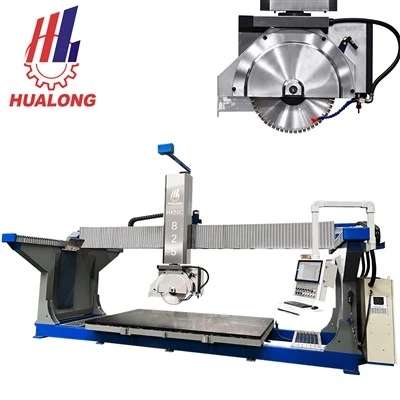
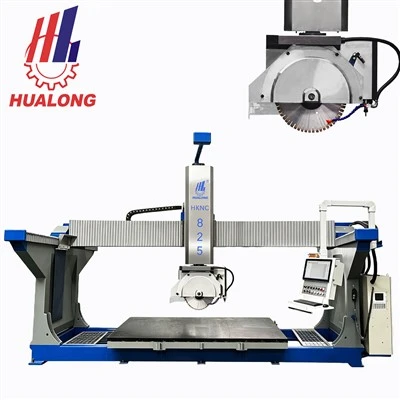
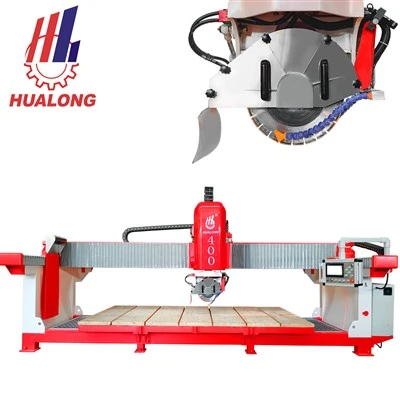
In the stone processing industry, ultra-thin multi wire saw machines are core equipment for the efficient processing of hard and brittle slabs such as marble, granite, and quartz. Improving cutting speed is a core industry demand; however, the inherent characteristics of stone-a Mohs hardness of 5-7, high dust levels during processing, and susceptibility to chipping and breakage-make simply increasing operating parameters prone to causing an imbalance between efficiency and quality. This article, based on the concept of precise adaptation and system optimization, constructs a speed-up solution that balances cutting accuracy, wire saw lifespan, and processing efficiency from four dimensions: diamond wire saw, process parameters, equipment structure, and daily maintenance.

I. Enhance the performance of diamond wire saws
The performance of the diamond wire saw directly determines the upper limit of the cutting speed. The core of optimization lies in adapting to the characteristics of the stone to achieve fast cutting and stable grinding.
Diamond, with a Mohs hardness of 10, is an ideal abrasive for efficient stone cutting. Precise selection based on slab type is crucial:
☆Cutting marble (medium-hard, brittle): Use 80–120 mesh electroplated diamond wire. The coating firmly holds the abrasive, suppressing chipping and increasing cutting efficiency by approximately 30%.
☆ Cutting granite (high-hardness, wear-resistant): Use 60–80 mesh resin-bonded diamond wire. Its excellent self-sharpening properties delay abrasive dulling, and combined with a multi-layered structure increasing abrasive bonding density by 40%, the number of effective cutting teeth per unit time is significantly increased, resulting in a substantial speed increase.
The wire saw body uses high-carbon steel wire with a zinc-nickel alloy coating. With a tensile strength ≥2800MPa, it can withstand high-speed cutting loads, reducing the risk of wire breakage. The coating effectively resists dust abrasion, extending the diamond wire's lifespan by 20% and reducing downtime for wire replacements.
The optimal wire diameter is 0.3–0.8 mm to avoid bending and deflection issues common with wire diameters <0.3 mm, balancing cutting efficiency and tension stability to ensure simultaneous high-speed operation of multiple wires.
II. Optimizing Core Process Parameters to Reduce Resistance, Consumption, and Improve Efficiency
Process parameter optimization aims to reduce cutting resistance and unnecessary losses, achieving a balance between speed and stability.
1. Optimized Linear Speed
☆Marble/Limestone: 12–18 m/s, an improvement of 40%–80% compared to the traditional 8–10 m/s;
☆Granite/Basalt: 8–12 m/s, an improvement of 33%–50% compared to the traditional 6–8 m/s.
A 0.3-second buffer is added during wire changeover, reducing the line speed to 5 m/s to minimize impact and ensure continuous high-speed cutting.
2. Feed Rate Matching
☆Brittle Stone (Marble): 0.8–1.5 mm/min, with an elastic feed mechanism that reduces speed upon encountering resistance and increases speed without resistance, resulting in a 50% increase in efficiency compared to a constant low-speed feed.
☆Hard Stone (Granite): 1.5–2.5 mm/min, increasing feed efficiency by 50%–67%, while enhancing chip removal to prevent dust accumulation and increased resistance.
3. Cutting Fluid and Chip Removal System
Using water-based cutting fluid, cutting resistance is reduced by approximately 30%. A polyethylene glycol chip removal agent is added to avoid the sludge buildup associated with oil-based cutting fluids.
Combined with a high-pressure annular spray, inclined chip collection trough, and negative pressure dust collection system, rapid dust removal is achieved, preventing abrasive clogging and ensuring continuous and stable high-speed cutting.


III. Upgrading Equipment Adaptability to Ensure High-Speed Cutting Accuracy and Stability
1. Optimized Tensioning and Guiding System
A sealed servo constant tensioning system is adopted, with a tension accuracy of ±0.2N. This isolates dust interference, ensuring uniform tension across multiple wires and preventing abnormal force on a single wire from dragging down overall efficiency.
Tension parameters are set according to stone type: marble 12–15N, granite 15–18N, meeting the requirements of high-speed cutting.
The guide wheels are made of ceramic material with sealed bearings, offering 8 times the wear resistance of steel guide wheels, with radial runout ≤0.01mm. This effectively reduces wire saw vibration and running resistance, ensuring cutting accuracy.
2. Upgraded Worktable Fixing and Structure
A dual locking structure of vacuum adsorption (suction force ≥0.08MPa) + mechanical clamping is adopted to prevent sheet material displacement during high-speed cutting, reducing rework rates.
The worktable uses a cast iron base with a silicon nitride wear-resistant coating, combining high rigidity and low friction characteristics. This shortens clamping assistance time and indirectly improves overall machine operating efficiency.
IV. Standardize Daily Maintenance to Reduce Downtime Losses
Continuous equipment operation is key to improving overall efficiency. Standardized maintenance can prevent overall productivity decline due to downtime caused by malfunctions.
Weekly checks for diamond wire abrasive shedding rate; if it exceeds 25%, the wire should be replaced immediately to prevent slippage caused by insufficient abrasive and avoid a sudden drop in cutting efficiency of 50%.
When the cutting force suddenly increases from 12N to 18N, it is considered abrasive dulling, and the wire saw must be replaced promptly.
Regularly clean dust from key components such as the tensioning mechanism and guide wheels with a 0.6MPa high-pressure air gun, and rinse the worktable and chip collection box with clean water to prevent dust accumulation and clogging.
Cutting fluid should undergo three-stage filtration: 100μm metal mesh to filter large particles → 20μm paper filter to filter medium dust → 5μm ceramic membrane to filter fine dust, ensuring a cleanliness level ≤5mg/L, preventing nozzle clogging, and ensuring smooth chip removal and high-speed cutting.