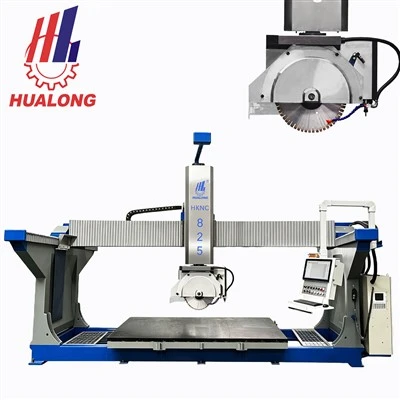
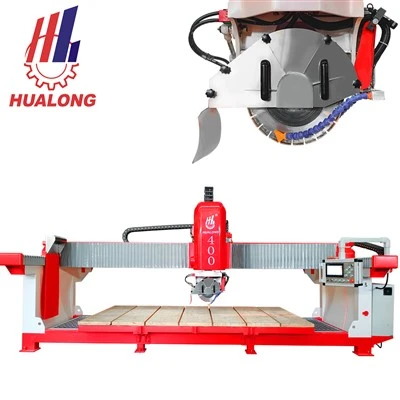
Hard stones such as granite, basalt, and quartz have a Mohs hardness of 6-8, significantly increasing cutting resistance. However, ultra-thin multi wire saw machines can achieve stable cutting. Traditional cutting methods show numerous drawbacks in such scenarios: frequent wire breakage, rough cut surfaces, and soaring energy consumption per unit area. The core pain points are concentrated in three main areas: low cutting efficiency, rapid equipment wear, and easy precision deviation.

Core Feasibility: Technical Support for Hard Stone Cutting Capabilities
ultra-thin multi wire saw machine abrasive selection needs precise matching: 0.5-0.8mm abrasive is preferred for cutting high-hardness stone, while 0.3-0.5mm abrasive is used for processing 3-5mm ultra-thin slabs. Through the synergistic effect of abrasive upgrades, equipment enhancement, and process optimization, the equipment can be fully adapted to cutting high-hardness stone.
The core abrasive uses diamond with a Mohs hardness of 10. Through resin-bonded optimization and multi-layer arrangement processes, it can maintain self-sharpening properties and avoid dulling under high-resistance environments.
The equipment employs a dual-column structure, ceramic guide wheels, and a servo tensioning system to ensure stable operation of the wire saw under high tension of 15-18N, without deflection or vibration.
Through intelligent linkage between the cutting force sensor and the variable frequency motor, the feed speed and wire saw rotation speed can be adjusted in real time to precisely address hard points in the stone, balancing cutting efficiency and wire saw lifespan.
Currently, the equipment can stably cut granite with a Mohs hardness of 7 and quartz with a hardness of 8, mass-producing 3-10mm ultra-thin slabs with a cutting accuracy of ±0.03mm and a surface smoothness ripple ≤0.02mm/m, meeting high-end processing requirements.
Key Solutions: Precise Breakthroughs in Three Core Pain Points

1. High-Abrasion-Resistant Diamond Wire: Core Consumable for Hard Stones
Addressing the rapid abrasive wear caused by high-hardness stone, upgrades and optimizations are made at the consumable level:
Abrasive Type: Preferred resin-bonded diamond wire reduces the breakage rate by 30%, achieving an effective cutting cycle of 700-800 meters for granite, and reducing consumable costs by 40%. - Abrasive Parameters: Uses 60-80 mesh coarse-grained diamond, spirally arranged in multiple layers (density increased by 50%), improving cutting efficiency by 25%.
Substrate Upgrade: Uses high-carbon steel wire + nickel alloy coated substrate, tensile strength ≥3000MPa, dimensional deviation controlled within ±0.02mm.
2. High Rigidity Equipment Configuration: Hardware Guarantee Against High Resistance
When cutting high-hardness stone, the contact force reaches 15-20N (twice that of soft stone). Hardware upgrades ensure accuracy and stability:
Machine Body Structure: 40Cr hardened column, beam deflection ≤0.01mm/m, wire saw parallelism error ≤0.02mm, avoiding machine body deformation.
Guide Wheel System: HRC 65 silicon nitride ceramic guide wheels (wear resistance 10 times that of steel guide wheels), V-groove accuracy ≤0.005mm, diamond wire deviation ≤0.008mm.
Tensioning and Drive: Servo motor + ball screw tensioning (accuracy ±0.1N), 15-18kW variable frequency drive motor, high load temperature ≤60℃.
3. Intelligent Process Parameters: The core logic of dynamically balancing efficiency and lifespan
Following the principle of "stable low-speed cutting, force control priority," process parameters are precisely set:
Cutting Speed: Conventional 30-35m/s, optimal speed for cutting grade 7 granite is 10m/s.
Feed Rate: Baseline 0.6-1.0mm/min, closed-loop force control (torque threshold 15-20N), dynamically adjustable according to stone hardness.
Cutting Fluid Supply: 0.6-0.8MPa high-pressure double-sided spray, combined with ethylene glycol low-temperature coolant (wire saw temperature ≤40℃) and extreme pressure agent, reducing cutting resistance by 15%.