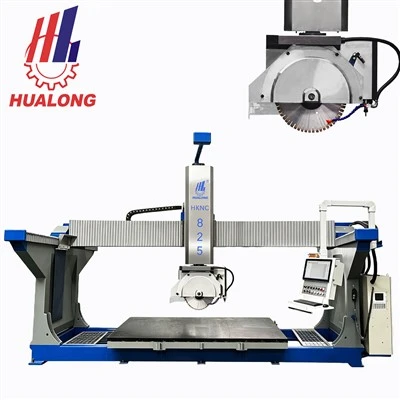
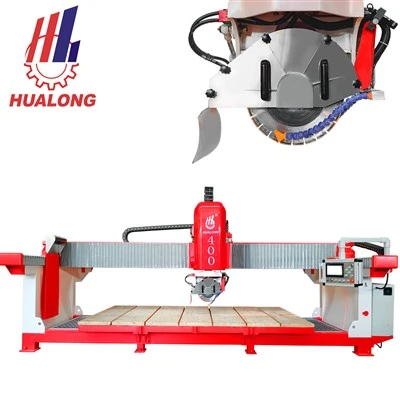
During the operation of a bridge cutting machine, moving components-such as the motor and the saw blade-generate vibrations in vertical, horizontal, and torsional directions. The level of vibration serves as a direct indicator of the magnitude of oscillation within the machine's structure while processing materials like stone, marble, or ceramic tiles.
Excessive vibration poses significant risks: it can cause the saw blade to deviate, resulting in uneven cut surfaces and dimensional inaccuracies-making it difficult to meet the high-precision requirements for custom countertops or complex, non-standard stone shapes. Furthermore, continuous alternating loads accelerate the wear of bearings and gears, leading to frequent downtime for repairs. For instance, some processing facilities have experienced edge chipping when working on large slabs due to excessive machine vibration, which increases the rate of rework and drives up maintenance costs. Low vibration is a hallmark of a robust machine structure and proper maintenance; it ensures consistent product quality and extends the equipment's service life.
Core Factors Influencing Vibration:
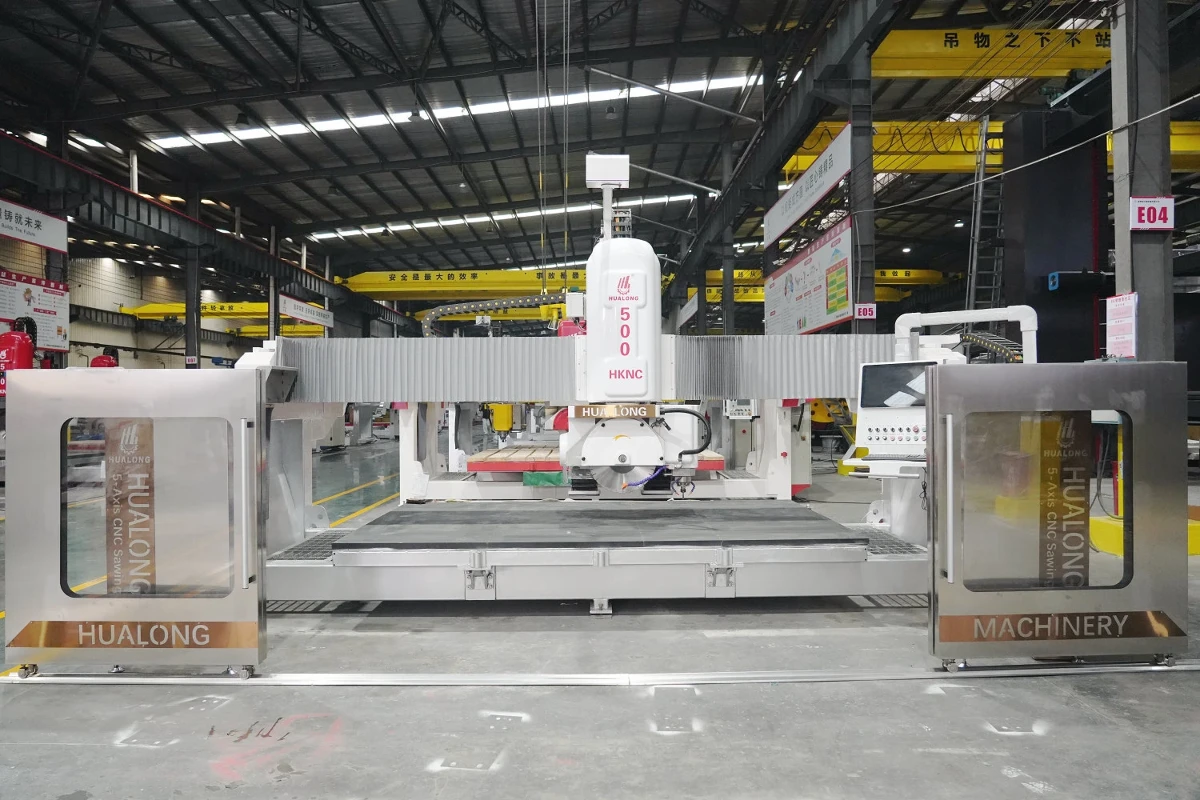
1. Manufacturing Quality: A high-rigidity frame, the use of premium-grade steel, and precision machining form the foundation for vibration reduction. Our bridge cutting machine feature a thickened main frame that suppresses the transmission of vibrations; many stone processing plants rely on them for the batch production of sintered stone countertops, achieving highly consistent cut surfaces.
2. Saw Blade Condition: An unbalanced or dull saw blade, or one with unevenly distributed teeth, can trigger intense vibration. Regular inspection and timely replacement are essential. Our five-axis CNC bridge-type tile cutting machines are supplied with high-quality, dynamically balanced saw blades-a setup our clients frequently use for precision-cutting complex marble edges, ensuring a smooth finish without chipping.
3. Operating Parameters: Spindle speed and feed rate must be kept within the equipment's optimal operating range; exceeding these limits can easily amplify vibrations.
4. Material Properties: Variations in the hardness and density of the slabs lead to significant differences in vibration behavior-for example, cutting granite typically generates more vibration than cutting marble. Our CNC systems can adaptively adjust cutting parameters based on the material; this feature allows clients to maintain stable vibration control even when processing a diverse mix of stone materials. 5. Operation and Maintenance: Regularly lubricate transmission components, tighten bolts, and calibrate shaft precision. Ensure the equipment is leveled and securely anchored. In one instance, a client neglected to level the machine during installation, leading to significant resonance during cutting; once the machine was properly installed and leveled, the vibration decreased substantially.
Vibration levels-including amplitude and frequency-can be measured using professional vibration analysis equipment to identify potential issues proactively.
We continuously refine the dynamic structure of our equipment and provide comprehensive training on operation and maintenance, helping clients keep vibration within an acceptable range. Our full product lineup-including bridge cutting machine, 5-axis CNC bridge saws for tile, and CNC waterjet cutters-is designed for low vibration and stable operation, meeting the diverse processing needs of everyone from small-scale contractors to large stone fabrication facilities.