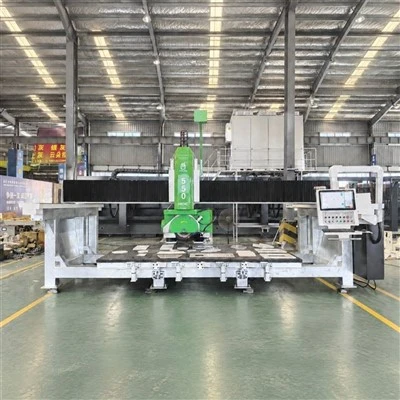
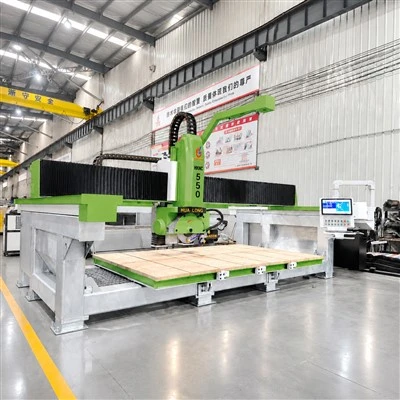
The CNC bridge saw is a mainstream piece of CNC cutting equipment in the stone industry; it utilizes a rigid saw blade to cut slabs and is highly efficient for the standardized processing of large-format materials. A waterjet cutting machine, by contrast, employs a "cold" cutting process-using a high-pressure stream of water mixed with an abrasive-to perform cuts without thermal damage. The choice between the two primarily depends on your production focus, material properties, precision requirements, and the geometric complexity of the workpieces.
Processing Requirements
Some production environments prioritize straight-line cutting, standardized slab sizing, and high-volume, repetitive processing. Other operations may focus on non-standard customization, intricate shaping, or complex, multi-axis contour cutting. Identifying your primary processing needs is essential for selecting the right equipment, ensuring that the machine's capabilities are neither excessive (leading to unnecessary costs) nor insufficient for your requirements.
Material Types and Thickness Ranges
The physical and chemical properties of the materials are critical variables in the selection process. Materials vary significantly in terms of their tolerance for heat and mechanical cutting forces-whether they are thick slabs, thin sheets, or a diverse mix of materials. You must choose the cutting technology best suited to your specific operational context. Different materials-such as stone, ceramics, glass, or metal-have distinct requirements regarding cutting stress and edge-chipping control, which serves as a key basis for equipment selection.
Processing Precision and Edge Quality Standards
Different projects have varying requirements for tolerance control and the quality of the cut edge. Standard slab sizing, decorative pattern processing, and high-precision intricate cutouts each demand different levels of precision and operational flexibility; these should be evaluated against the final acceptance criteria for your finished products.
Production Capacity and Total Operating Costs
Annual production targets and long-term maintenance and operating costs are also vital considerations. CNC bridge saws are better suited for stable, continuous slab-processing workflows. Waterjet cutting, which relies on abrasives to perform cold cuts, is ideal for complex or variable cutting paths; however, the consumption of abrasives and other consumables can increase the per-unit processing cost.
Automation Configuration and Complex Shaping Capabilities
The need for production-line automation and the geometric complexity of the workpieces are direct factors that dictate the choice of equipment. The five-axis CNC bridge-cutting machine enables multi-directional positioning, making it well-suited for automated, batch-production shaping in the stone industry. Its waterjet cold-cutting process eliminates thermal deformation, offering exceptional flexibility for machining complex curves and intricate, non-standard profiles.