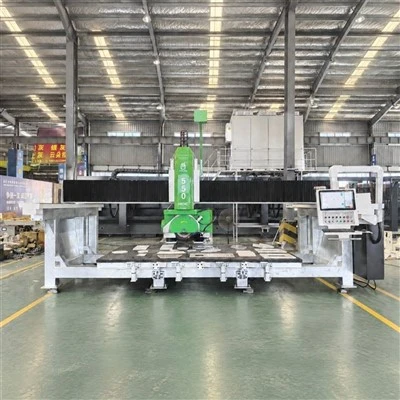
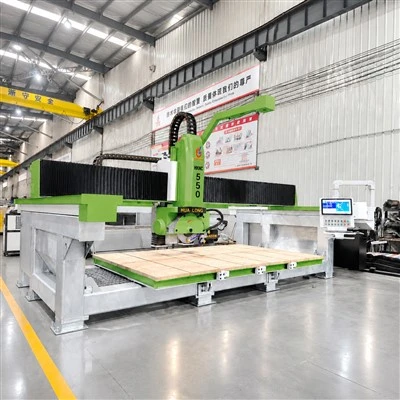
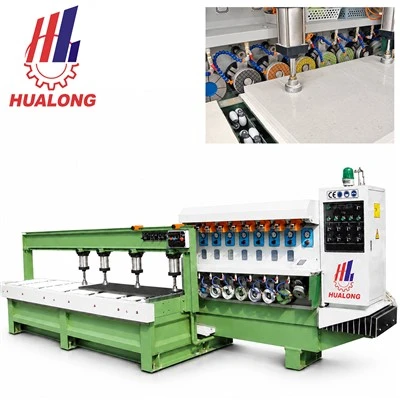
In the stone processing industry, cutting precision is the primary factor determining both the quality of the finished product and production efficiency. The automatic stone bridge saw is the standard CNC processing equipment used in stone fabrication facilities. Utilizing a bridge-style frame and a CNC system to drive the movement of the saw blade, it enables precise straight-line and angled cuts on materials such as marble and granite-ideal for producing countertops, floor tiles, and decorative stone elements. Drawing on our extensive industry experience, we break down the key factors that influence cutting precision, the value provided by high-precision processing, and its practical applications.


Four Key Factors Influencing Cutting Precision
1. Machine Structure and Manufacturing Quality
A robust, stable machine frame suppresses vibrations during the cutting process, preventing the saw blade from deviating from its intended path. Heavy-duty steel construction combined with precision machining ensures that all components are accurately aligned, maintaining consistent cutting standards whether for small-batch custom orders or continuous mass production.
2. Diamond Saw Blade Performance
The choice of saw blade must be tailored to the specific type of stone being processed. High-quality diamond blades feature sharp, well-spaced teeth and appropriately sized abrasive grains, resulting in uniform kerfs (cuts). This minimizes issues like edge chipping or uneven surfaces, ensuring a smooth finish even when working with challenging stone materials.
3. CNC Control System
The CNC system independently regulates the saw blade's rotational speed, feed rate, and cutting depth. Once the operator inputs the required dimensions and angles, the machine executes the process automatically. This reduces the risk of human error and allows for the batch processing of multiple dimensions with consistent, uniform precision.
4. Operator Expertise
Automation does not eliminate the need for skilled oversight. A proficient operator can select the right saw blade for a specific stone type, fine-tune operating parameters, and monitor the entire process. Comprehensive training ensures that operators can fully leverage the machine's capabilities to consistently produce high-quality, compliant workpieces.
Three Key Benefits of High-Precision Cutting
Precise cutting maximizes raw material utilization, reduces waste, and helps control production costs-aligning with the need for resource conservation. Furthermore, it ensures tight, seamless joints between components, resulting in a refined, high-end appearance that meets the rigorous standards required for projects such as luxury hotels and premium residential developments. High-precision cutting significantly reduces the need for rework and eliminates the requirement for frequent adjustments, effectively boosting daily output and accelerating delivery timelines.
Conclusion
The consistent precision of an automatic stone bridge saw is the result of the synergy between the machine's structural design, the quality of the saw blade, the CNC control system, and the proficiency of the operator. By minimizing waste, enhancing quality, and increasing production capacity, high-precision processing equipment has become the cornerstone of modern stone fabrication facilities.
Whether you operate a small workshop or a large-scale processing plant, our automatic stone bridge saws are designed to meet your most demanding cutting requirements. We provide reliable equipment backed by comprehensive support. If you would like to learn more about our products or have any questions regarding stone processing, please feel free to reach out-we will work with you to develop a tailored solution based on your specific operational needs.