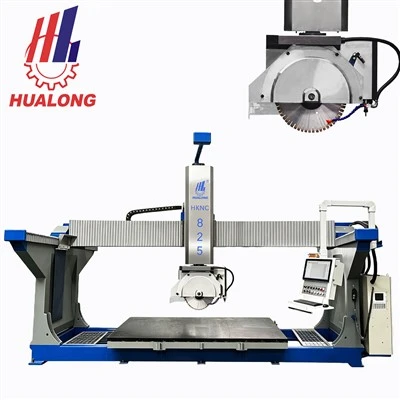
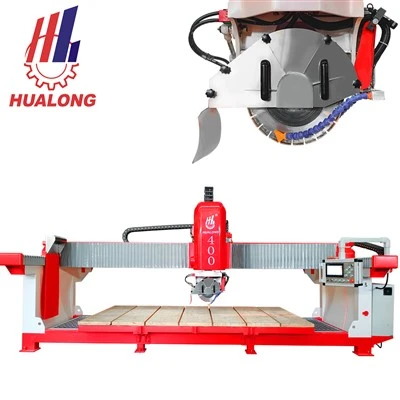
As the demand for customized stone products continues to grow, stone engraving machines have become essential equipment for the transformation and upgrading of processing plants. Through engraving technology, enterprises can undertake high-value-added orders-such as custom decorative panels, architectural signage, spatial décor, commemorative items, and personalized stone products-thereby moving beyond the low-margin, commoditized competition typical of traditional stone cutting and polishing. By combining high-quality stone with refined designs, these customized products offer superior texture and higher value, effectively expanding the business scope and profitability of processing plants.
Engraving equipment enables diverse processing capabilities-including logos, text, decorative moldings, and artistic carvings-serving a wide range of clients such as designers, contractors, commercial venues, and private customers. This allows businesses to evolve from merely selling raw stone materials to providing comprehensive, scenario-specific, and customized finished stone solutions. Engraving processes demand high standards for equipment stability, operational precision, tool compatibility, and depth control; inadequate performance or improper setup can lead to quality issues like edge chipping, incomplete patterns, or blurred text, resulting in the waste of expensive raw materials. Therefore, equipment selection must align precisely with specific processing requirements and production needs.
I. Core Functions and Selection Principles for Stone Engraving Machines
Stone engraving machines can perform marking, pattern carving, and three-dimensional sculpting on both natural and engineered stone surfaces. Depending on the machine configuration and stone characteristics, they can achieve various effects, ranging from shallow marking and mid-depth decorative carving to deep 3D relief work. Core functions include engraving text, logos, and patterns; creating bas-reliefs, decorative moldings, and nameplates; precision stone marking; and producing custom artistic or commemorative stone carvings-making them suitable for the vast majority of stone customization scenarios.
The key to selecting the right equipment lies in precisely matching performance capabilities with production needs. Small workshops focusing on simple nameplate production do not require high-end machinery, whereas large-scale factories handling complex wall panels and massive custom components need equipment offering high precision and stability. Critical selection factors include the working table size, spindle power, control precision, tool compatibility, engraving depth adjustment, stone clamping mechanisms, and dust extraction and water circulation systems. It is also necessary to distinguish between the equipment requirements for small-batch flexible production and large-batch standardized production to avoid either over-specification or under-configuration.
II. Key Application Scenarios for Decorative Stone Panels
Decorative stone panels represent the application area with the highest commercial value for stone engraving machines. Widely used in high-end interior and exterior decoration-such as in hotels, villas, office buildings, commercial venues, and showrooms-they transform ordinary stone slabs into distinctive decorative elements with strong design appeal.
Interior Decorative Wall Panels: By engraving geometric patterns, floral motifs, custom logos, or artistic lines, standard marble or granite slabs can be transformed into unique feature walls. This approach combines the natural texture of stone with customized design effects, adds depth to interior décor, and enables processing plants to command higher product premiums.
Hotel and Commercial Space Decoration: Engraved stone is ideal for high-end applications such as lobby backdrops, reception area walls, elevator surrounds, corridor wall panels, and retail store interiors. Commercial decoration demands exceptional craftsmanship consistency; when multiple panels are joined, engraving depth and pattern alignment must be uniform. The equipment's machining precision and repeatability directly determine the final visual outcome.
Custom Architectural Pattern Production: Machines can mass-produce repetitive patterns, engraved borders, relief panels, and decorative moldings required for construction projects. Compared to manual carving, machine processing offers superior precision and consistency, meeting the standardized mass-production needs of large-scale integrated fit-out projects, ensuring a unified decorative style, and enhancing both construction efficiency and finished product quality.
III. Commercial and Outdoor Stone Signage Engraving Applications
Valued for their durability, premium texture, and weather resistance, stone signs are widely used in commercial buildings, municipal parks, hotels, villas, office complexes, and memorial sites. Applications range from shop signs and office nameplates to landscape wayfinding signs, estate entrance markers, commemorative plaques, and project identification plates.
Outdoor signage demands rigorous craftsmanship quality; engraved text and patterns must be crisp, well-defined, and highly durable. Finished products with insufficient engraving depth or rough edges are prone to becoming blurred or illegible over time due to erosion from sunlight, rain, wind, and sand. Regarding substrate selection, granite-characterized by high hardness and strong weather resistance-is the preferred material for outdoor signage; marble, with its elegant texture, is suitable only for indoor settings or high-end signage applications sheltered from the elements.
IV. Characteristics of Carving Processes for Mainstream Stone Substrates
Granite Carving: Granite is highly hard, wear-resistant, corrosion-resistant, and stable, making it ideal for durable projects such as outdoor signage, commemorative stone carvings, and architectural facades. However, its high hardness places rigorous demands on equipment: the machine body must be rigid, the spindle must have sufficient power, and the tooling must be highly adaptable. Precise control of carving speed and depth is essential to avoid issues such as rough textures, uneven depth, and excessive tool wear.
Marble Carving: With its soft veining and elegant texture, marble is a premier material for high-end interior decoration, suitable for wall panels, luxury interiors, artistic carvings, and cultural or religious stone products. Marble is relatively brittle and prone to edge chipping or scratching; processing requires smooth machine operation, precise tool paths, and fine depth adjustments to achieve intricate carving details while preserving the integrity of the stone surface.
V. Custom Carving Processes Driving Upgrades for Processing Plants
Custom carving is key for stone processing plants to break free from low-price competition and enhance core competitiveness. While traditional basic products suffer from severe commoditization and thin margins, carving processes enable the creation of differentiated, high-end products-ranging from custom-patterned countertops, commemorative carvings, and stone awards to artistic wall features, garden signage, branded architectural elements, and personalized home stone products.
High-precision custom stone products cater to the needs of designers, contractors, high-end commercial clients, and private customers. Processing plants can handle the entire production process in-house without outsourcing carving work, thereby effectively controlling costs, ensuring timely delivery and product quality, and consistently securing high-value custom orders.
VI. Key Factors for Equipment Selection
Selecting a stone carving machine should not be based merely on machine size; the choice must align with four core factors: stone hardness, product dimensions, design complexity, and order volume. Key selection criteria include: spindle power determines capabilities for processing hard stone and executing deep carvings; control precision ensures the faithful reproduction of details in patterns, text, and reliefs; worktable dimensions dictate the maximum processing area; tool compatibility meets the needs of various materials and processing techniques; precise depth control guarantees visual uniformity and clear lettering in the finished product; dust extraction and water circulation systems optimize the production environment and ensure operational safety; a robust material clamping system minimizes errors caused by vibration; an intelligent control system accommodates both custom designs and batch processing; and comprehensive maintenance support effectively reduces the risk of downtime.
When selecting equipment, avoid focusing solely on price; low-specification, low-precision machines are prone to processing defects-such as ruined stone or the need for order rework-which ultimately increase production costs and damage the company's reputation.
VII. Common Pitfalls and Scientific Selection Methods
Common purchasing mistakes in the industry include: selecting equipment based solely on size; ignoring variations in stone hardness; pairing hard stone with low-power spindles; overlooking tool compatibility and dust/water management systems; applying generic processing parameters; neglecting staff training and after-sales service; and failing to plan for future business expansion.
Scientific selection should be centered on product positioning: for signage production, prioritize engraving depth and text clarity; for decorative wall panels, prioritize worktable size and pattern repeatability; and for hard granite processing, focus primarily on spindle power and tool wear resistance.
VIII. Key Considerations for Equipment Procurement
Before purchasing equipment, enterprises must clearly define their production needs. Selection should be based on a comprehensive assessment of factors such as primary stone types, product categories, processing dimensions, engraving precision, design complexity, order volume, workshop infrastructure, staff technical proficiency, and after-sales requirements-rather than focusing merely on short-term budget constraints. Equipment that aligns with long-term production goals enables the consistent output of high-quality decorative panels, durable signage, and intricate custom stone carvings, thereby continuously enhancing product value-add and market competitiveness.