Introduction
View Our Products
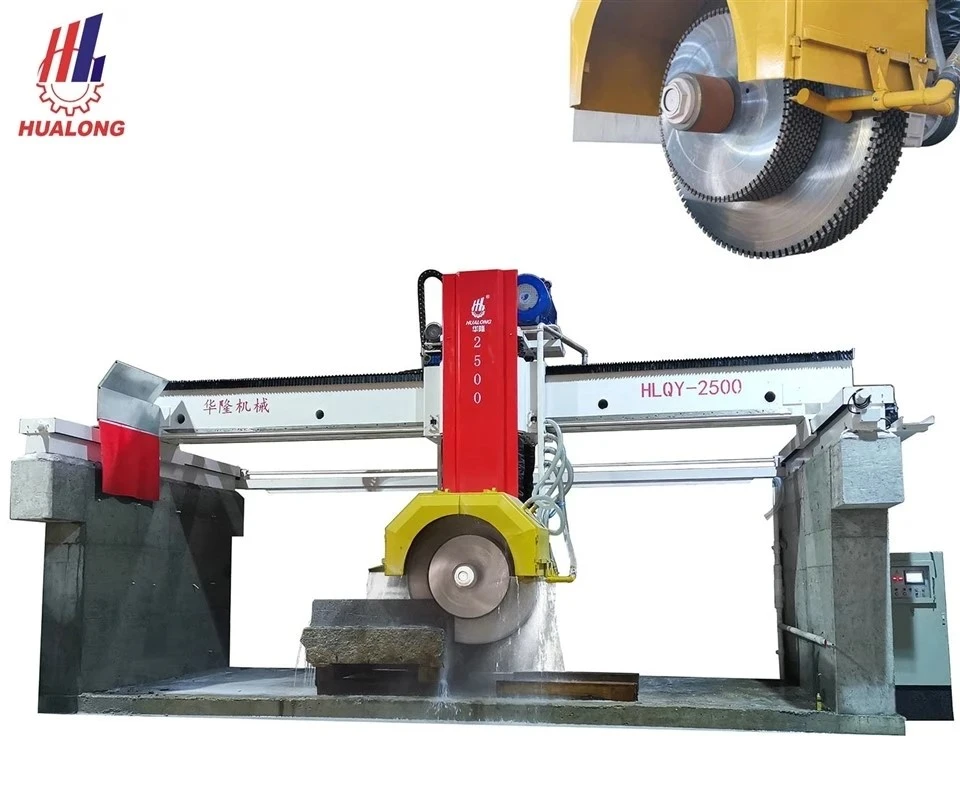
How AI Intelligent CNC Control Reduces Operator Labor
Simplified Cutting Setup
Operators enter the required slab thickness and relevant cutting parameters through the control panel, allowing the system to coordinate cutting operations and reduce reliance on experienced workers for repeated manual adjustments.
Automated Continuous Production
Once the machine is correctly configured and the operating conditions are suitable, automated cutting can support extended production runs and reduce the need for continuous manual operation during night shifts.
Intelligent Operating Adjustments
When adaptive control functions are available, monitoring spindle load and cutting resistance can help adjust operating parameters to changing stone conditions, reducing unnecessary operator intervention and the risk of blade damage.
Reduced Training Requirements
Standardized CNC procedures make routine production less dependent on individual operator experience, helping factories train replacement workers more efficiently and maintain consistent operating practices across shifts.
How Full Servo Precision Feeding Reduces Slab Rework
Closed-Loop Feeding Accuracy
Controlled Slab Thickness
With a specified slab thickness tolerance of ≤ ±0.3 mm, the machine can reduce thickness variations that would otherwise require additional grinding, surface correction, or dimensional rework.
Lower Downstream Labor
Fewer Rework-Related Delays
Reducing thickness deviations can lower the risk of repeated processing and prevent avoidable labor from being spent on slabs that fail dimensional acceptance requirements, although actual results depend on stone characteristics and downstream processes.
How an Extended Beam Reduces Loading and Handling Labor
Higher Loading Capacity
A 10-meter extended beam can accommodate approximately 10–15 stone blocks per loading arrangement, compared with the 7-meter standard beam, subject to block dimensions and layout.
Fewer Loading Interruptions
Processing more blocks in one arrangement can reduce the frequency of loading-related stops, giving operators more productive machine time and reducing avoidable waiting between cutting cycles.
Better Crane & Forklift Utilization
A more organized loading schedule allows material-handling personnel to coordinate crane and forklift movements around production needs rather than responding to frequent machine stoppages.
More Efficient Shift Planning
Although an extended beam does not automatically eliminate handling labor, it can improve workflow coordination and help factories allocate support workers more efficiently across multiple production tasks.
How a Permanent Magnet Variable-Frequency Motor Reduces Maintenance Labor
Adaptive Motor Control
Lower Energy Consumption
The specified 28%–38% energy-saving range can reduce electricity costs under suitable operating conditions, while more efficient motor operation may also reduce unnecessary adjustments during production.
Reduced Blade Maintenance
Planned Maintenance Scheduling
How Remote Cloud Control Reduces Production Management Costs
Remote Machine Monitoring
An IoT monitoring platform can allow authorized personnel to check supported machine operating information from a computer or mobile device, reducing unnecessary trips to the production floor.
Faster Exception Handling
Remote visibility into machine status can help managers identify stoppages or abnormal operating conditions sooner and coordinate an appropriate response with on-site personnel.
Data-Driven Workforce Scheduling
Production data can help supervisors identify idle periods, recurring interruptions, and workload imbalances, making it easier to schedule operators and maintenance staff according to actual production demand.
Lower Supervisory Overhead
By centralizing machine-status information, factories can reduce repetitive manual reporting and routine inspection trips, although remote monitoring does not replace required safety inspections or on-site troubleshooting.
How to Calculate Labor Cost Savings per Square Meter
Factories can evaluate the financial benefits of an intelligent multi blade stone cutting machine by comparing labor hours and accepted slab output before and after an equipment upgrade.
- Measure Total Labor Hours: Record the hours spent on machine operation, slab correction, material handling, maintenance, and production supervision for a comparable production volume.
- Calculate Labor Cost per Square Meter: Divide total labor expenditure by the area of accepted slabs produced to establish a consistent baseline for comparing production methods.
- Compare Actual Production Results: Evaluate labor cost per square meter alongside energy consumption, blade expenditure, rework rates, and downtime to determine whether the equipment delivers meaningful operating savings.
- Estimate the Payback Period: Compare the expected annual savings with the total investment and installation costs, using actual factory data rather than assuming that automation will eliminate specific positions or guarantee a fixed return.

Conclusion
Explore Your Cutting Solution with Us