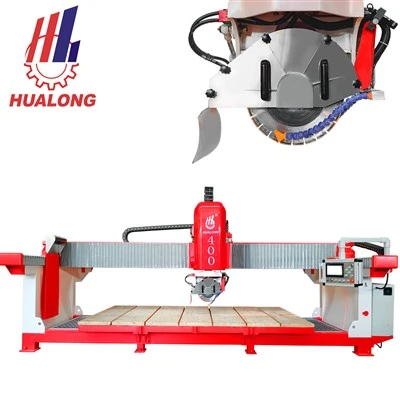
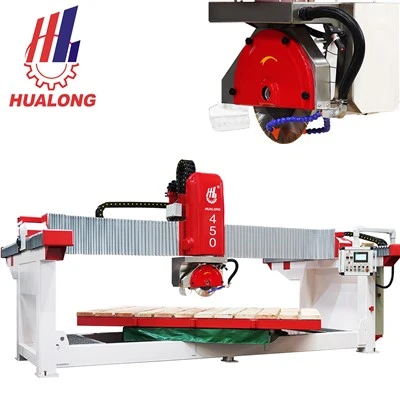
As the core mining equipment in quarries, the scientific selection of Stone Quarry Machine directly determines mining efficiency, equipment wear rate, and overall operating costs. Improper selection can easily lead to problems such as capacity mismatch, frequent equipment failures, and excessive consumable wear, significantly increasing operating costs. Only by deeply integrating precise selection with scientific cost control can an optimal balance between mining efficiency and cost-effectiveness be achieved.
I. Core Selection Logic for Stone Quarry Machine: Adaptability First, Avoiding Hidden Costs
Selection is the starting point for cost control. The core focus is on precise matching based on three key dimensions: rock strata characteristics, capacity requirements, and operating scenarios. This fundamentally eliminates problems such as high-configuration machines being idle and low-configuration machines being overloaded, avoiding hidden cost losses.
1. Selecting based on rock strata characteristics to strictly control equipment wear: For hard rock, select high-rigidity, high-power crushers and wear-resistant parts to reduce maintenance losses; for soft rock, use medium-power, economical models to strictly control procurement costs and ensure efficiency; for weathered rock, prioritize composite models to avoid rework waste.
2. Select models based on production capacity requirements to avoid waste: Large quarries should choose fully automatic heavy-duty models to match large-scale production capacity; small and medium-sized quarries should choose mobile models to reduce procurement and capital occupation costs; small workshops should choose economical models to improve capital turnover efficiency.
3. Select models based on operating scenarios to reduce auxiliary costs: Open-pit quarries should use tracked mobile models to reduce infrastructure and transportation costs; fixed sites should use stationary models to reduce energy consumption and maintenance costs; mountainous areas should use lightweight, high-climbing-rate models to reduce transportation and safety investment.
II. Full-cycle cost control techniques: Precise cost reduction from procurement to operation and maintenance
The cost of quarrying machines is not limited to the procurement stage. Operation and maintenance losses, consumable consumption, energy expenditures, and other full-lifecycle costs account for a larger proportion, requiring precise control at each stage to achieve optimal overall cost.
1. Procurement stage: Strictly control costs at the source, prioritize high-performance models, use high-quality wear-resistant materials for core components, compare after-sales policies, and select functions as needed to avoid procurement premiums and hidden costs later.
2. Operation and Maintenance: Establish a regular maintenance mechanism, scientifically replace easily worn original parts, strengthen operator training, standardize operating procedures, and reduce component wear and human-caused losses.
3. Operation: Accurately match operating parameters, optimize material feeding and operating processes, eliminate equipment idling and jamming, reduce energy consumption and consumable losses, and improve single-machine operating efficiency.
4. Post-Operation: Prioritize upgrading core components when capacity increases, revitalize idle equipment (through modification or leasing), standardize scrapping disposal and recycle usable parts, and reduce replacement and capital occupation costs.
III. Collaboration between Selection and Cost Control: Avoiding Pitfalls and Achieving Optimal Balance
1. Avoiding Pitfalls: Avoid blindly pursuing low prices (avoiding high maintenance and downtime costs later) and high configurations (eliminating capital and capacity waste).
2. Collaborative Logic: Focus on scenario and capacity suitability in selection, strictly control procurement costs, and emphasize loss reduction and efficiency improvement in operation and maintenance. The two work together to achieve sound operation.
3. Differentiated Control: Small and medium-sized quarries prioritize machine models and strictly control procurement and maintenance costs; large quarries focus on equipment stability and production capacity, relying on intelligent management to reduce costs and improve efficiency.
IV. Summary
The core of quarry machine cost control is "precise selection as a prerequisite and full-cycle management as the key." Selecting models that fit the rock strata, production capacity, and application scenario avoids hidden costs, while refined operation and maintenance control minimizes energy consumption. Combining these two approaches can achieve cost reduction and efficiency improvement, enhancing the competitiveness and profitability of quarries.