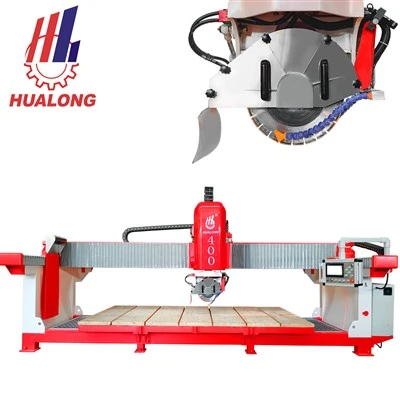
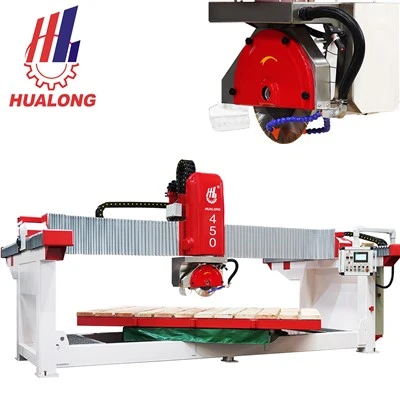
In the stone processing industry chain, bridge saws are core equipment that determines production capacity, quality, and cost. Choosing the right bridge saw for the right scenario can reduce scrap rates and improve cutting efficiency from the source; using the right bridge saw for the right process can reduce tool wear and labor input, turning each process into actual profit. Choosing the wrong one will lead to insufficient precision, frequent malfunctions, and high costs; even the most advanced equipment will fail to realize its value if used incorrectly.
I. Choosing the Right Bridge Saw: Precise Matching is the Starting Point of Efficiency
The core of choosing a bridge saw is not "choosing the most expensive," but "choosing the right one." Precise matching with the processing scenario is essential to maximizing efficiency.
Determine Automation Based on Production Capacity: Small factories with small-batch production can use basic laser positioning and manual loading and unloading; large factories with large-scale production must be equipped with automatic loading and unloading and intelligent path optimization to reduce labor and improve production continuity.
II. Using the Right Bridge Saw: Attention to Detail is the Core of Profit
Choosing the right equipment is only the foundation. Scientific use and precise management are crucial to maintaining profits and preventing waste of consumables and equipment wear and tear from eroding revenue.
1. Adjust parameters to suit the process and reduce consumable costs: Adjust the feed speed and saw blade speed according to the hardness of the stone, and match the corresponding saw head formula to extend saw blade life and reduce consumable expenses.
2. Ensure proper daily maintenance and reduce downtime costs: Regularly lubricate the guide rails and lead screws, clean the filter screen, monitor spindle accuracy, and replace worn saw blades in a timely manner to reduce downtime due to malfunctions and ensure production capacity.
3. Precise operation and adherence to standards to reduce scrap costs: Use laser positioning to calibrate the sheet metal, vacuum adsorption to prevent displacement of thin plates, and simulation preview before processing irregular shapes to strictly control the scrap rate and increase profits.
III. Right Selection + Right Use: Two-way Efforts for Maximum Profit
1. Selection as a Prerequisite: Avoid the phenomena of "high-configuration idle" and "low-configuration overload." The former leads to wasted procurement costs, while the latter results in inefficient processing and equipment wear and tear, both of which compress profit margins. Precise adaptation to the scenario is the optimal cost-effective solution.
2. Core Logic: Precise equipment selection ensures that equipment investment translates into high-efficiency production capacity, while standardized machine usage safeguards profitability through full-process control. The synergy of these two factors helps stone processing enterprises leverage efficiency advantages to achieve market breakthroughs and solidify their profit foundation.
IV. Conclusion
The value of a stone bridge saw is never merely that of a "cutting tool," but rather a core lever for improving efficiency and increasing profits. Choosing the right equipment ensures it meets production needs, improving efficiency from the source; using it correctly allows the equipment to perform at its optimal level, safeguarding profits throughout the process. Only by balancing precise equipment selection with professional machine usage can the bridge saw become a powerful tool for enterprises to reduce costs, increase efficiency, and enhance core competitiveness, achieving a dual improvement in efficiency and profit.